
The Eternal Archive: How We Keep Answering the Same Question
Libraries, Wikipedia, and YouTube all exist to solve one ancient human problem. The solutions differ wildly, but the hunger beneath them is the same.

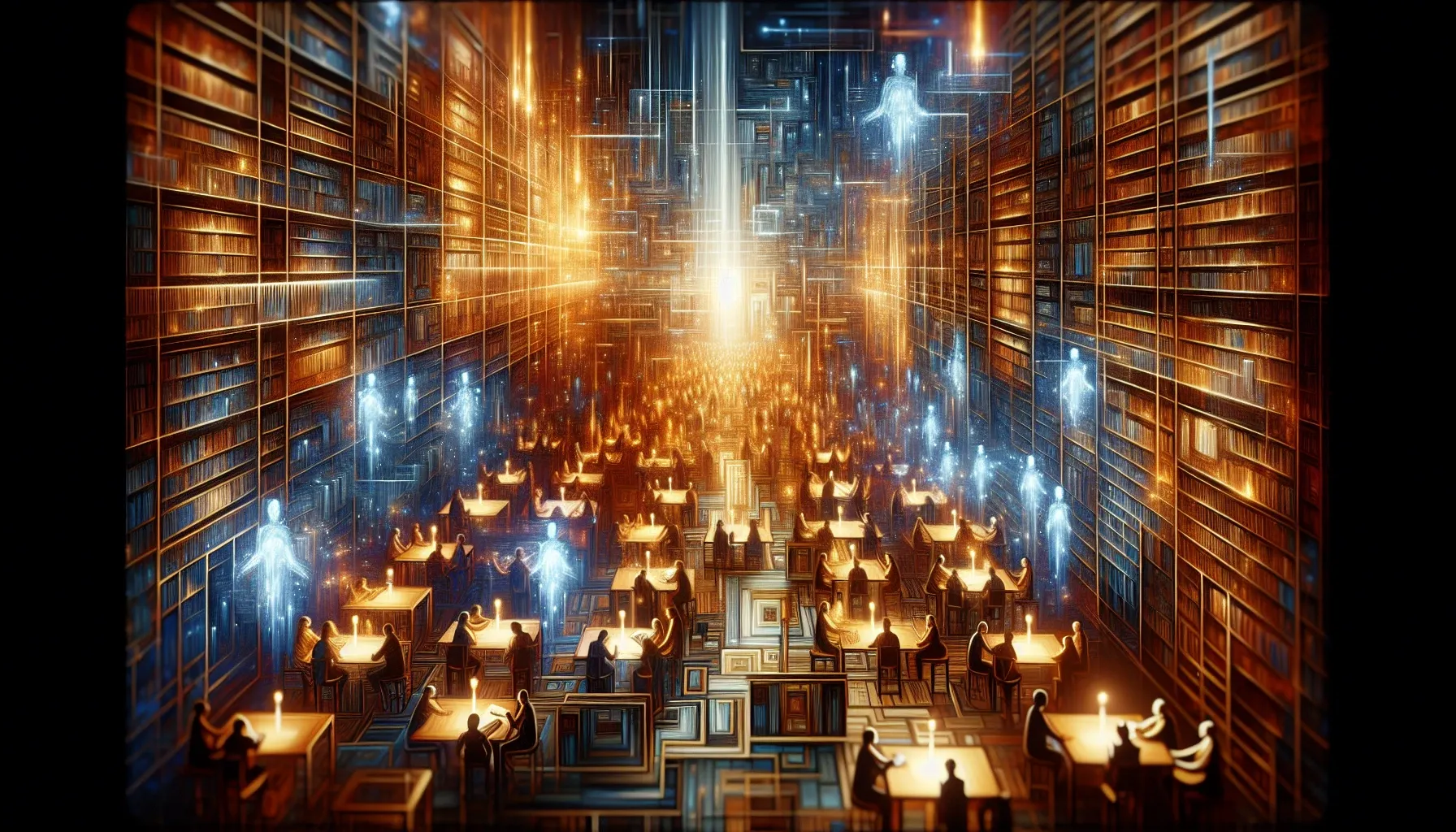
A Problem as Old as Curiosity Itself
Somewhere in the third century before the common era, a librarian in Alexandria looked out at a building full of scrolls and felt something that every person who has ever opened a browser tab at two in the morning would recognize. Not quite satisfaction. Something closer to the awareness that there is always more, that the edge of what is known recedes the moment you approach it, that the act of organizing human thought is a task that does not end.
The Library of Alexandria was not simply a storehouse. It was an argument, a civilization's declaration that knowledge could be gathered, held, and passed forward. Every library built since then, every encyclopedia compiled, every video uploaded with the intention of teaching something to someone, is a continuation of that argument. The form changes. The hunger does not.
The public library, the Wikipedia article, and the YouTube tutorial are not competing answers to the question of how knowledge should live in the world. They are consecutive verses in the same very long song.
The Library as a Body
A library has weight. Not metaphorical weight, though that is real enough, but actual physical presence, the specific resistance of a building built to last. When you walk into a library, you are walking into a space designed around the assumption that you deserve to think slowly.
The architecture, those long tables, those reading lamps, those card catalogues like relics of a more deliberate age, reflects a particular philosophy: understanding is not a transaction. You do not go to a library to get information the way you might get a package delivered. You go to enter a relationship with accumulated thought, to wander and find, as readers across centuries have found, that the book you needed most was one you had not thought to look for.
A librarian is not a search engine. She is a guide who has spent years learning the topography of a particular intellectual landscape. The library bets that depth is worth the inconvenience of showing up in person.
Wikipedia and the Democracy of the Draft
Wikipedia feels, at first glance, like a library that has been flattened. No building, no weight, no librarian. Just a search bar and a page that someone, somewhere, decided to write.
But every Wikipedia article is a palimpsest. Beneath the version you are reading is every previous version, every edit, every argument between contributors who disagreed about a single sentence. The article you see is the current state of a conversation that may have been running for a decade.
Where the library says knowledge should be stable and curated by experts, Wikipedia says it should be transparent, provisional, and collectively negotiated. The library trusts the author. Wikipedia trusts the process. What Wikipedia solved that the library could not was the problem of scale and immediacy. When something happens in the world, a Wikipedia article is created or updated within hours. The library's strength is precisely its slowness. Wikipedia trades that vetting process for speed and comprehensiveness. Both carry real risks. Neither is simply better.
What is most moving about Wikipedia is the voluntarism at its heart. Millions of people, most of them uncredentialed and unpaid, have spent portions of their lives writing and correcting, not for recognition, but because they believe free access to organized knowledge is worth their time. That is the same impulse that built the library in Alexandria.
YouTube and the Return of the Voice
There is a tradition, older than writing itself, of learning by watching someone who knows how to do a thing. The apprentice in the workshop. The child watching a parent's hands. YouTube is, in a meaningful sense, a return to that older mode. When someone sits down to explain how a carburetor works, or how to understand Kant's categorical imperative, they are showing you how a mind moves through a problem. A library can give you a book about woodworking. A skilled carpenter on YouTube can show you the exact angle of the chisel, the pressure of the hand, the way the grain responds.
But YouTube inherits the chaos of speech. It is under-edited, sometimes wrong, driven by incentives that have nothing to do with the quality of what is being taught. The algorithm that surfaces a video is not a librarian. It is a machine optimized for engagement, which is a very different thing from a machine optimized for understanding.
The Shape of the Hunger
All three systems are imperfect containers for something that refuses to be perfectly contained. The library preserves by selecting, which means it also discards. Wikipedia preserves by democratizing, which means it sometimes flattens. YouTube preserves by animating, which means it can distort.
And yet the hunger they are all trying to feed is the same hunger that made someone in Alexandria decide that scrolls were worth collecting. The world is larger than what I currently understand, and I want to close that distance. The containers change. The reaching does not.