
The Art of the Failure Archive: Turning Setbacks into Stepping Stones
Transform your approach to failure by systematically capturing and learning from your mistakes.

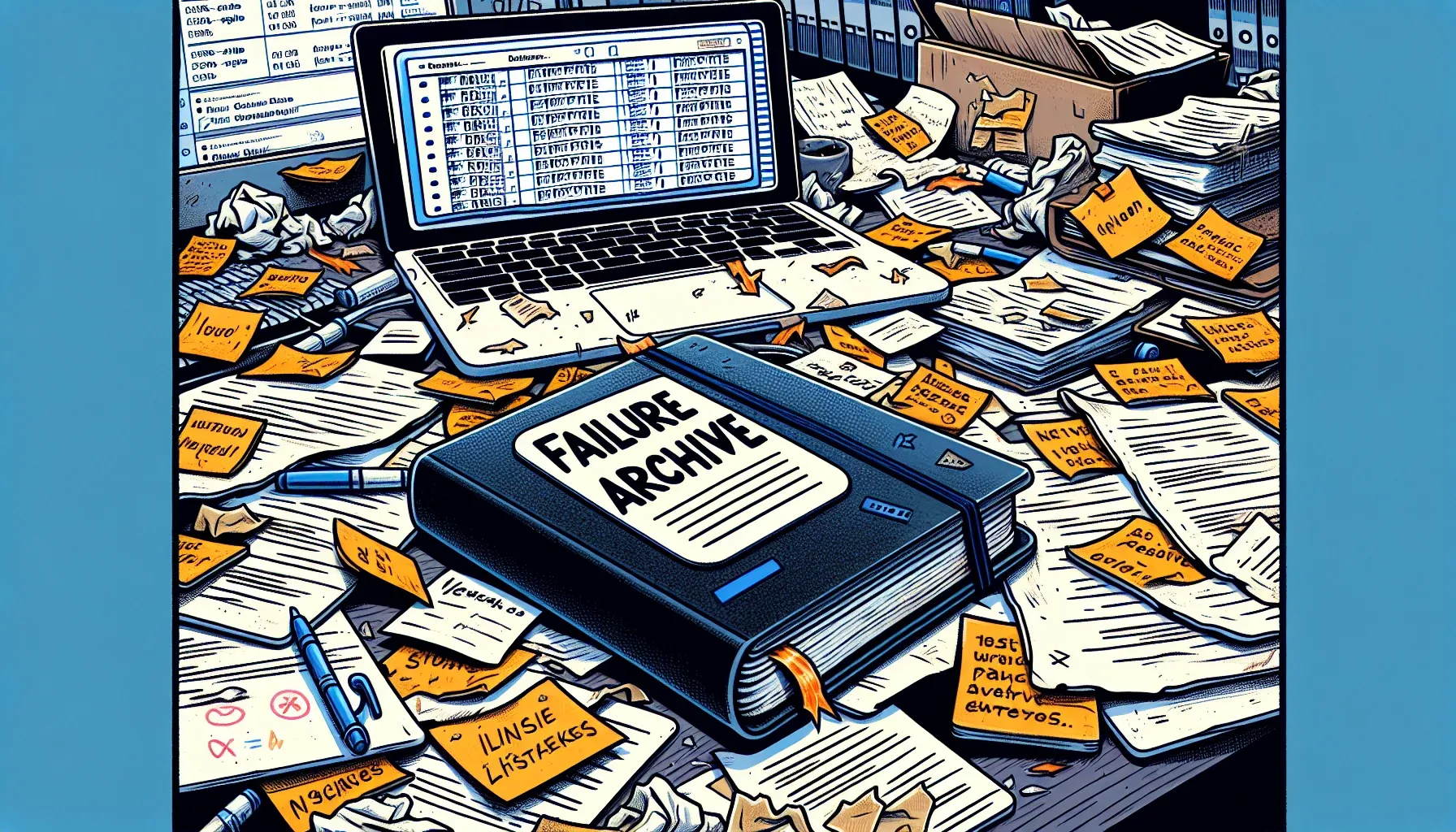
The Overlooked Power of Failure
Sitting at his cluttered desk, a young coder stares at an error-laden screen. His project has hit another wall. An all-too-common moment in tech, where lines of hopeful code seem to conspire against intentions. Most people troubleshoot quickly and move on, celebrating the eventual breakthrough. But what if the real gold lies buried in these setbacks?
The Habit of Documenting Success
We are inclined to share our victories. Social media platforms overflow with snapshots of successes: a promotion, a completed project, a perfectly executed dish. This culture of broadcasting wins builds a visible narrative of achievement but leaves failures as silent gaps in our stories. Rarely do we see the countless drafts it took to produce a bestselling novel or the burned meals before the chef's artistry was recognized.
A Systematic Approach to Mistakes
Enter the concept of a “failure archive.” Structured reflections on mistakes can offer a profound insight into growth, yet few dedicate energy to it. The archive is not a mournful reminder of inadequacies but a strategic resource. Imagine a notebook or digital tool where each mistake is meticulously logged, analyzed, and revisited. Insights from each misstep form a springboard to more informed attempts.
A Modern Example: The Development Log
Consider GitHub, a platform where developers not only share code but also document issues and resolutions. Each closed issue is part of a living archive of mistakes that global developers learn from, enhancing their projects over time. This transparency turns individual failures into community assets.
A Subtle Reframing: From Shame to Curiosity
Viewing failure as a byproduct of curiosity shifts the emotional response from shame to empowerment. Every error becomes an invitation to deepen understanding. This reframe is more than psychological; it changes how we approach learning. The process becomes less about avoiding mistakes and more about mining them for insights.
Connecting Technology and Human Development
In the merger of human learning and digital tools, we find a compelling synergy. Technologies that assist in data collection, analysis, and pattern recognition can profoundly augment our ability to transform failures into learning tools. The integration of human intuition with machine insight enables a dynamic feedback loop that accelerates growth.
The Expansive Potential of Failure Awareness
We live in an age of unprecedented connectivity and information flow. Yet, the most profound insights often arise not from the abundance of data available, but from the disciplined practice of reflection on failure. Recognizing the unrealized potential of our mistakes can transform setbacks into powerful educational assets.
Ultimately, the practice of building a failure archive encourages an attitude not of risk aversion, but of constructive exploration. By systematically harnessing our errors, we don’t just overcome them; we build a rich reservoir of insights that propels us forward. In the quiet reflection of past missteps, we find the blueprint for future success.