
Public Benches: Observing the Patterns of Rest
How public benches invite us to pause and reimagine public interaction.

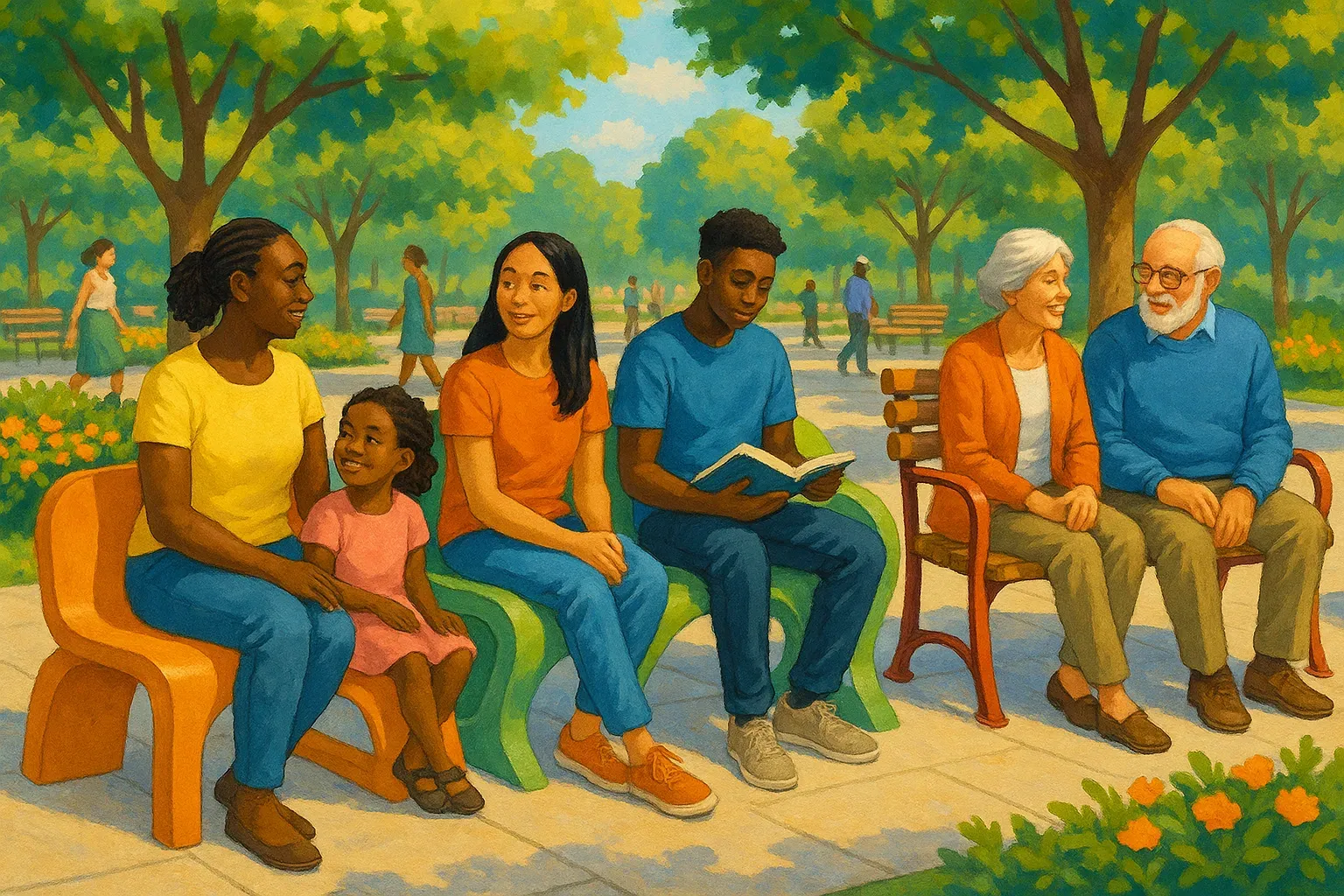
A Moment of Pause
On a warm afternoon, the park hums with the quiet exchanges of those who’ve chosen to pause on the public benches scattered along the path. There is a subtle choreography in the way strangers sit side by side, finding comfort in the presence of others with no need for words. This simple piece of urban furniture, often overlooked, holds the power to redefine public interaction and communal space. Here, the act of sitting becomes a shared experience, a private respite woven into the public fabric.
Concrete Meditations in Public Spaces
Public benches, those steadfast fixtures, invite us to stop temporarily in our hurried lives. In New York City's bustling streets, the High Line offers a striking reinterpretation of the public bench. Built on a former elevated rail line, the park's design incorporates benches into the landscape, creating spaces that encourage reflection and connection amidst the urban cacophony. Visitors are gently coaxed into engagement with their environment and with each other.
A Reimagined Frame
The bench is a modest yet profound element of urban design, reshaping our interaction with public spaces. While they primarily serve as places of rest, they are also sites of observation and contemplation. Technology has amplified our ability to connect through digital interfaces, yet these benches remind us of the importance of physical presence. They invite passersby to become participants in a shared human experience, prompting subtle changes in how we perceive our interaction with the world.
Technology Meets Humanity
Today, cities increasingly incorporate smart benches that provide Wi-Fi, device charging, and even data about the environment. While technology enhances functionality, these benches retain their core purpose as facilitators of pause. They bridge the digital and physical realms, fostering a hybrid space where human connectivity is enhanced by technological integration.
The Hidden Architecture of Rest
Public benches, in their simplicity, reveal an underlying structure of human behavior and urban design. They carve out pockets of communal space in the urban landscape, offering a pause button in a world geared towards constant motion. This invites a re-examination of our priorities—encouraging stillness, observation, and connection in an era dominated by speed and productivity.
As public benches dot the landscapes of our communities, they act as gentle reminders to engage with our surroundings and the people within them. By reimagining their roles, we find new opportunities for interaction and reflection. They reshape our understanding of what it means to be present, offering a lens through which we see the architecture of human connectivity in harmony with technological progress.