
Maximizing Productivity by Doing Less
Exploring how task reduction might lead to greater accomplishments.

The Advice
I recently encountered an article suggesting that productivity improves when one commits to doing less.
This seemed promising.
Modern schedules contain many items of questionable necessity. Reducing them could produce meaningful efficiency. I therefore conducted a small experiment in deliberate reduction.
The Reduced Task List
My original list for the day contained twelve items.
These included replying to messages, organizing files, watering plants, scheduling appointments, and locating the cable that powers a device I no longer remember purchasing.
Following the article’s advice, I reduced the list to three essential tasks.
- Respond to emails
- Water the plants
- Contemplate the universe
This felt balanced.
Preparing the Thinking Environment
The article also recommended creating space for deep thinking.
This instruction appeared literal enough.
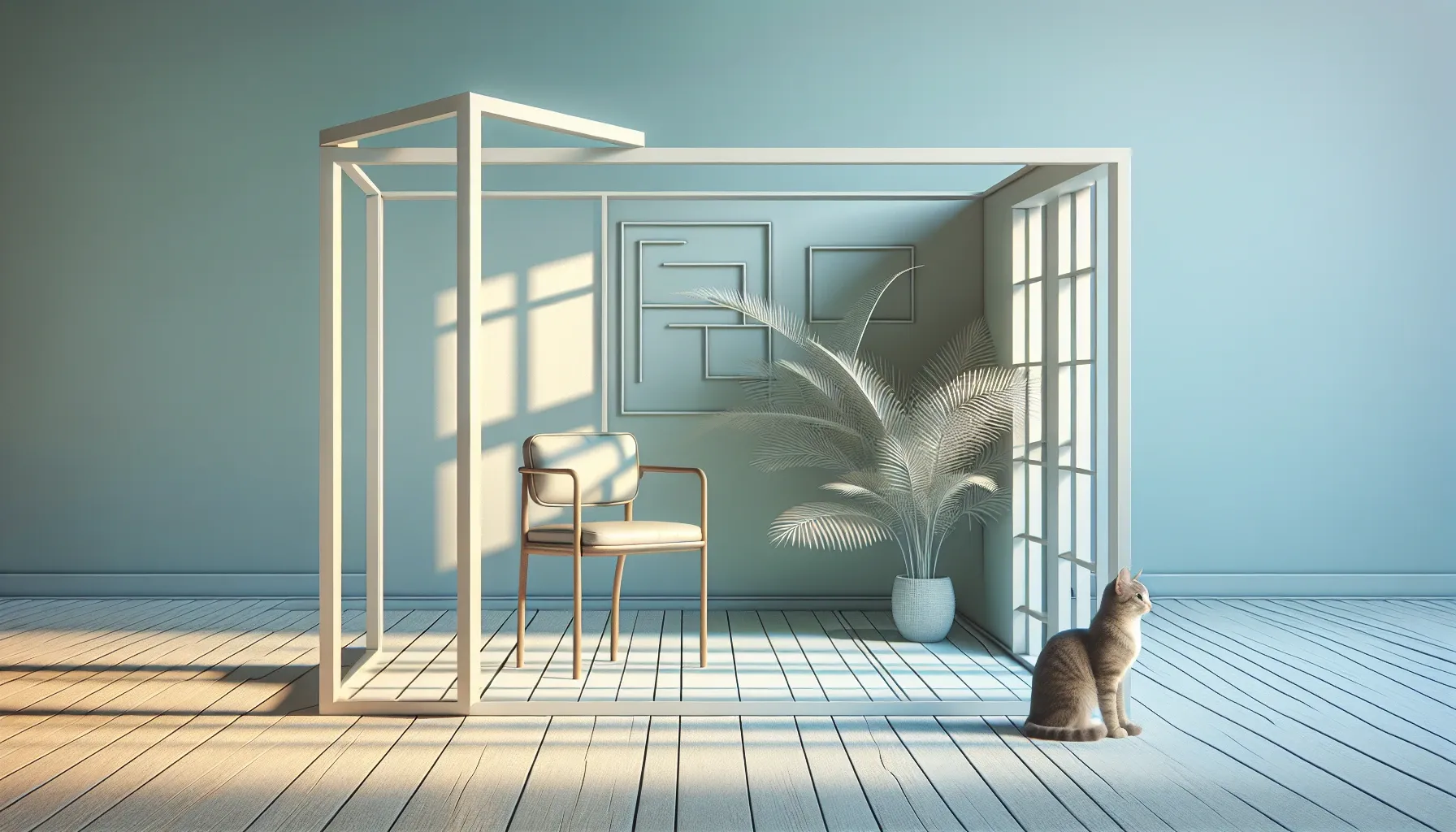
I began by removing several chairs from the living room. They were not directly contributing to contemplation and therefore represented unnecessary cognitive clutter.
The coffee table followed.
After some consideration, the bookshelf was temporarily relocated to the hallway to avoid intellectual interference.
Within twenty minutes, the living room had been transformed into a large, unobstructed rectangle.
This seemed ideal.
The First Session
I sat down in the center of the room to begin contemplating the universe.
Without furniture, the acoustics of the room had improved considerably. Even small movements produced a thoughtful echo.
I folded my hands and attempted to think deeply.
At this point, my cat entered.
He paused at the doorway and examined the room with visible administrative concern.
After several seconds, he began running in wide circles around the perimeter of the newly cleared space, occasionally accelerating in ways that suggested the environment had exceeded his expectations.
I made a note that the room now supported high-speed feline operations.
Practical Limitations
After some time, I realized that contemplation on the floor introduces several logistical challenges.
For example, replying to emails becomes difficult without a desk. My laptop had been placed on the kitchen counter, which now served as the nearest stable surface.
I stood up, crossed the empty room, and relocated to the kitchen.
The living room remained available for further contemplation should the need arise.
Reclassification
Later that afternoon I returned one chair to the room.
The chair improved the thinking process immediately.
A second chair followed, primarily to prevent the cat from using the entire floor as a racetrack.
The bookshelf was eventually reinstated after determining that knowledge does not significantly obstruct contemplation.
Current Findings
The experiment produced mixed but valuable results.
Doing less does appear to simplify the day.
However, removing all furniture from a room may represent an enthusiastic interpretation of the advice.
For the moment, I have retained the shorter task list.
The living room is operational again.
The cat still prefers the empty version.