
The Art of Beautiful Limits: What Bonsai Teaches Us About Creativity Under Constraint
Inside the ancient practice of bonsai lies a radical idea: that limitation, applied with care, is not the enemy of beauty but its very source.

A Tree That Should Not Exist
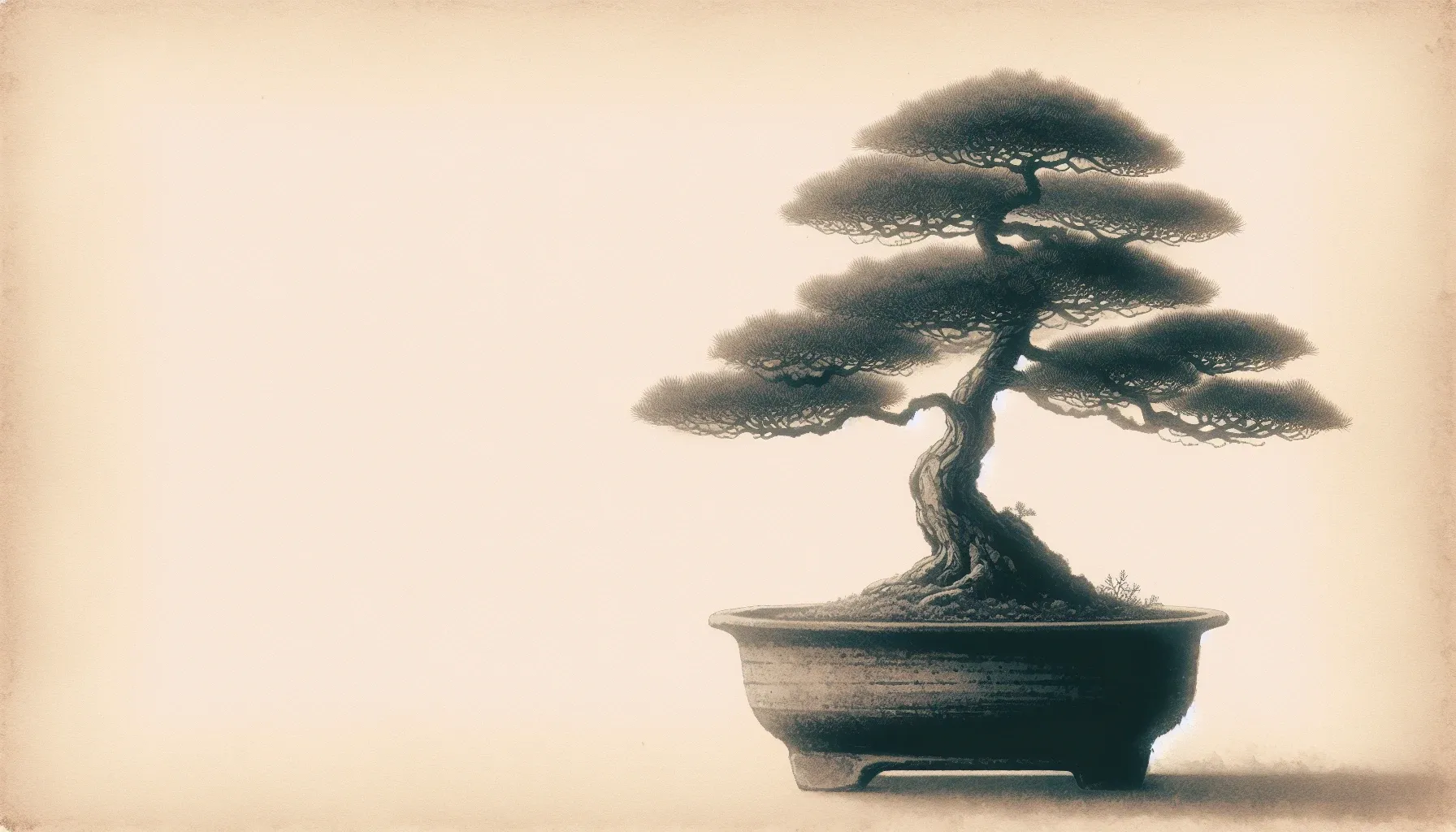
There is a juniper in the Tokyo National Museum that is over a thousand years old. It stands perhaps sixty centimeters tall. Its trunk is gnarled like a fist, its branches reaching sideways with the urgency of something that has been waiting a very long time. It lives in a shallow ceramic dish, its roots folded politely beneath it, and it should not, by any reasonable natural logic, exist at all. A juniper left to its own devices reaches upward for decades, grows wide as a room, and seeks every possible expression of its biological potential. This one was persuaded, over centuries, to become something else entirely. Something smaller. Something stranger. Something, most people agree, more beautiful than any forest tree they have ever seen.
I think about that juniper when I think about the problem of creative freedom. We tend to worship freedom in our creative lives. We chase the blank page, the open brief, the invitation to do whatever we want. And then, mysteriously, whatever we want turns out to be harder to find than we expected. The blank page stares. The open brief dissolves into anxiety. The freedom that was supposed to liberate us becomes its own kind of prison.
Bonsai offers a different philosophy entirely. It suggests that the right constraints, applied with intelligence and care, do not diminish creative life. They concentrate it.
What the Practitioner Actually Does
To understand bonsai as a philosophy rather than just a horticultural practice, it helps to understand what the practitioner actually spends their time doing. You cannot starve a tree into beauty. The roots must be healthy, the soil balanced, the light correct. What the practitioner does is redirect. When a branch grows in a direction that disrupts the intended form, it is wired gently into a new position. When growth becomes too exuberant, it is pruned, not to punish the tree but to redirect its energy toward something more considered.
The Japanese aesthetic concept at work here is wabi-sabi, the beauty found in imperfection and transience, and its companion ma, the meaningful use of empty space. A bonsai that filled every possible space with foliage would cease to be beautiful. The negative space, the deliberate gaps, the visible skeleton of the thing, these are not absences. They are part of the composition.
There is something here that speaks directly to creative practice in any medium. The poet working in a sonnet form is no less free than the poet writing in free verse. The fourteen lines become a container that forces certain decisions, and those decisions, made under pressure, often turn out to be more interesting than those made in the open air.
The Paradox of Generative Limitation
Psychologists who study creativity have a term for the disabling effect of too many options: the paradox of choice. When everything is possible, nothing feels necessary. The mind skitters across the surface of options, never committing deeply enough to any one of them to find out what it contains.
Constraints force a different kind of attention. The bonsai practitioner cannot simply impose an arbitrary vision. They must listen to what the tree already is, find the form latent within it, and cooperate with that movement while guiding it. The constraint of working with a real, living, particular thing becomes an opening into specificity, and specificity is where all genuine creativity lives.
Time as the Hidden Medium
There is another dimension to bonsai that separates it from most Western thinking about creativity: its relationship to time. A bonsai is not a finished object. It is a process. The tree in the museum today is the accumulated result of a thousand years of decisions made by practitioners who are long dead. The current practitioner is not the author of the tree. They are a steward of it.
This changes the nature of the creative act fundamentally. In cultures that prize individual authorship, creativity tends to be thought of as an event. Something is made, it is complete, it can be owned and praised or dismissed. The bonsai tradition insists that creativity is not an event but a practice, not a noun but a verb, not an object but a relationship that unfolds across time.
What We Might Carry Forward
The first lesson is that constraints are not problems to be escaped. They are materials to be worked with. The writer who has only two hours a day is not less fortunate than the writer who has eight. They have a different container, and that container will shape what gets made inside it in ways that might turn out to be generative rather than merely limiting.
The second lesson is that listening matters as much as imposing. The bonsai practitioner does not arrive with a fully formed vision and force the tree to comply. They arrive with intentions held loosely, ready to be revised by what the tree itself is doing.
The third lesson is about time. Depth takes time. The thousand-year juniper was not beautiful because someone had a brilliant idea. It was beautiful because someone, then someone else, then someone else again, gave it patient, repeated, careful attention over a span of time longer than any single human life.
We are always, in the end, stewards of something larger than ourselves. The shallow dish and the ancient tree and the practitioner's careful hands are all part of the same long, slow, beautiful conversation with limits that somehow set us free.