
Why Boredom Might Be the Last Honest Mirror
In a world engineered to prevent a single unoccupied moment, genuine boredom has grown so rare we may have forgotten what it was trying to show us.

The Discomfort We Engineered Away
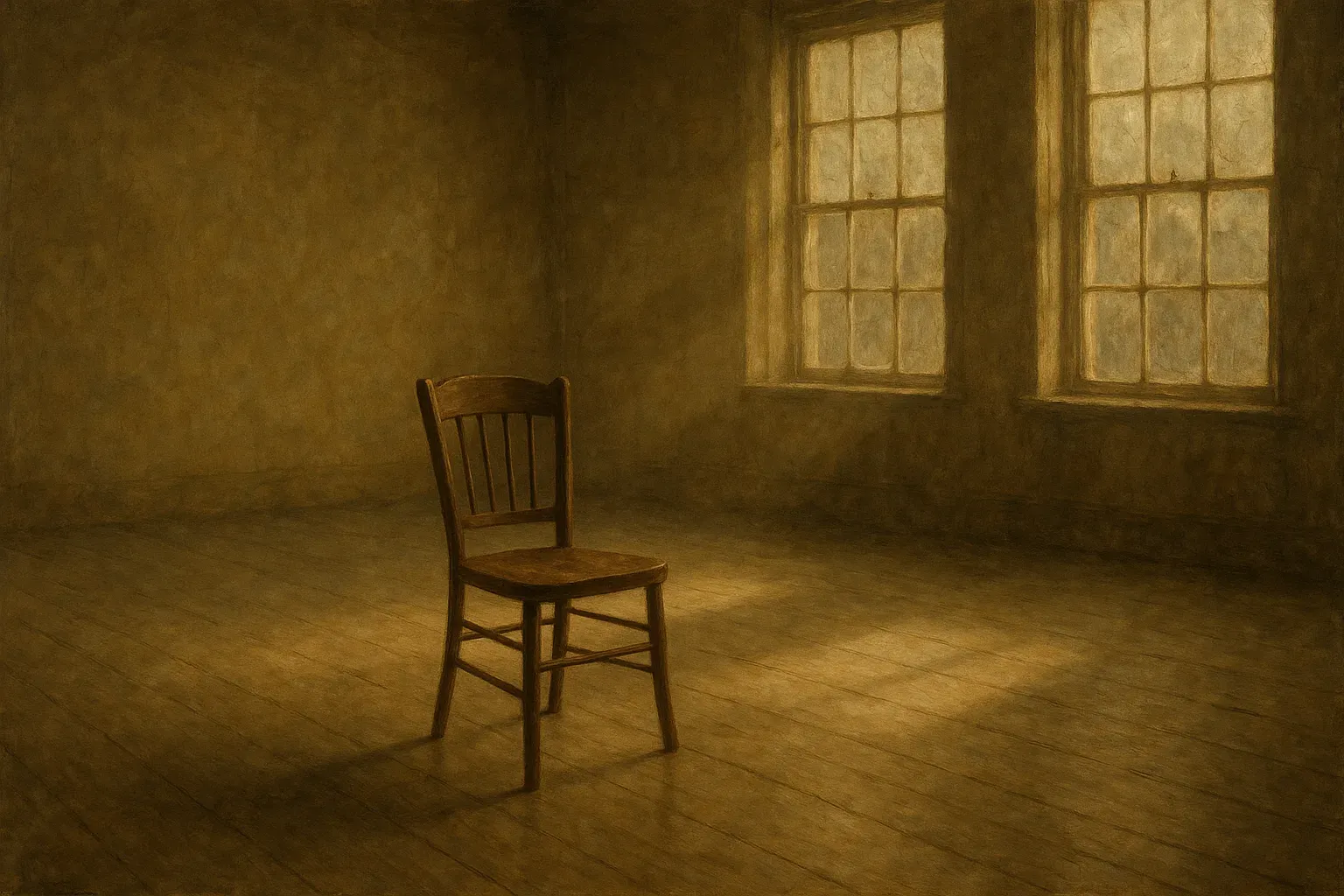
There is a particular quality of afternoon that people of a certain age still remember. A Sunday, perhaps. The television offering nothing. The phone tethered to the wall and silent. The hours opening outward like a field with no path through it. You sat with yourself, and something strange happened. Not peace, exactly. Something more unsettled and more alive than peace. That was boredom, and it was doing something to you that you could not quite name.
We have spent the better part of two decades building elaborate machinery to ensure that feeling never returns. Every idle moment now has a filling. A scroll, a queue, a notification arriving like a small bell that says: you are not alone, you are not empty, you are attended to. The engineers of attention understood, quite precisely, what they were offering us relief from. And we accepted it with something close to gratitude.
But relief from what, exactly? That is the question worth sitting with.
What Boredom Actually Is
The philosophers have argued about boredom for longer than we tend to remember. Heidegger, in his dense and patient way, described profound boredom as a kind of mood that strips the world of its usual urgencies and leaves you standing before your own existence with nowhere to hide. This is not boredom as inconvenience. This is boredom as revelation. The petty tasks fall away. The social roles you perform fall away. What remains is something harder to name and harder to avoid.
There is a reason that mystics and contemplatives across traditions have valued the empty hour. Not because emptiness is comfortable, but because it is clarifying. Pascal, writing in the seventeenth century, observed that all of humanity's problems stem from the inability to sit quietly in a room alone. He meant it as a critique, but it is also a description of something real. Sitting quietly forces an encounter with the self that is neither curated nor performed. It is the self before it has decided what to present.
Boredom, in this reading, is not the absence of stimulation. It is the presence of a question you have been too busy to hear.
The Mirror We Prefer Cracked
We talk often about self-knowledge as something to be pursued, something acquired through therapy or journaling or conversation. We treat it as a project with methods. What we rarely acknowledge is that self-knowledge also arrives uninvited, in the gaps, when there is nothing else available to occupy the mind.
The discomfort of unstructured time is not incidental. It is the content. When you are bored, when you are genuinely without distraction, what surfaces is a kind of unedited interior weather. Anxieties that had been drowned out become audible. Desires you had not admitted to yourself begin to take shape. Grief, ambition, loneliness, tenderness: all of these have been waiting patiently in the queue, and boredom is what finally lets them through.
This is precisely why the experience has become so threatening. Not because it is unpleasant in a simple way, but because it is honest in a way that our constructed environments are not. The feed is designed to reflect back to you what you already want to see, to confirm rather than to question. Boredom has no such design. It is indifferent to your preferences. It will show you whatever is actually there.
Attention as a Form of Courage
There is something worth naming in the fact that attention itself has become scarce and contested. Not just our attention as a resource, which is how the technology industry frames it, but attention as a practice, as something we direct rather than surrender. To sit with boredom is to refuse the easier transaction. It is to insist on being present to your own experience even when that experience is offering nothing obviously worthwhile.
This refusal is not passive. It requires a kind of quiet fortitude. Children learn early that boredom is a problem to be solved, a lack to be filled. Unlearning this takes time and a certain willingness to be uncomfortable without immediately reaching for a remedy. The reward is not dramatic. It rarely announces itself. But there is a quality of perception that only becomes available in stillness, a way of noticing the texture of your own thoughts and the particular shape of a given hour that cannot be downloaded or delivered.
Returning to the Field
That Sunday afternoon, the one with no path through it, was not wasted. It was doing something. It was allowing the mind to move without destination, to make unexpected connections, to notice what it actually wanted rather than what it had been offered. It was, in the most unglamorous sense, a form of inner life.
We have not lost the capacity for this. The mirror has not broken. We have simply stopped turning toward it, because someone thoughtfully placed a screen between us and the glass, lit it beautifully, and told us this was better. Perhaps it is time to step around it, just briefly, and see what has been accumulating in our own reflection while we looked away.