
The Evolutionary Genius of the Clipboard
Explore the clipboard's journey from a simple scrap of wood to a digital powerhouse shaping human efficiency.

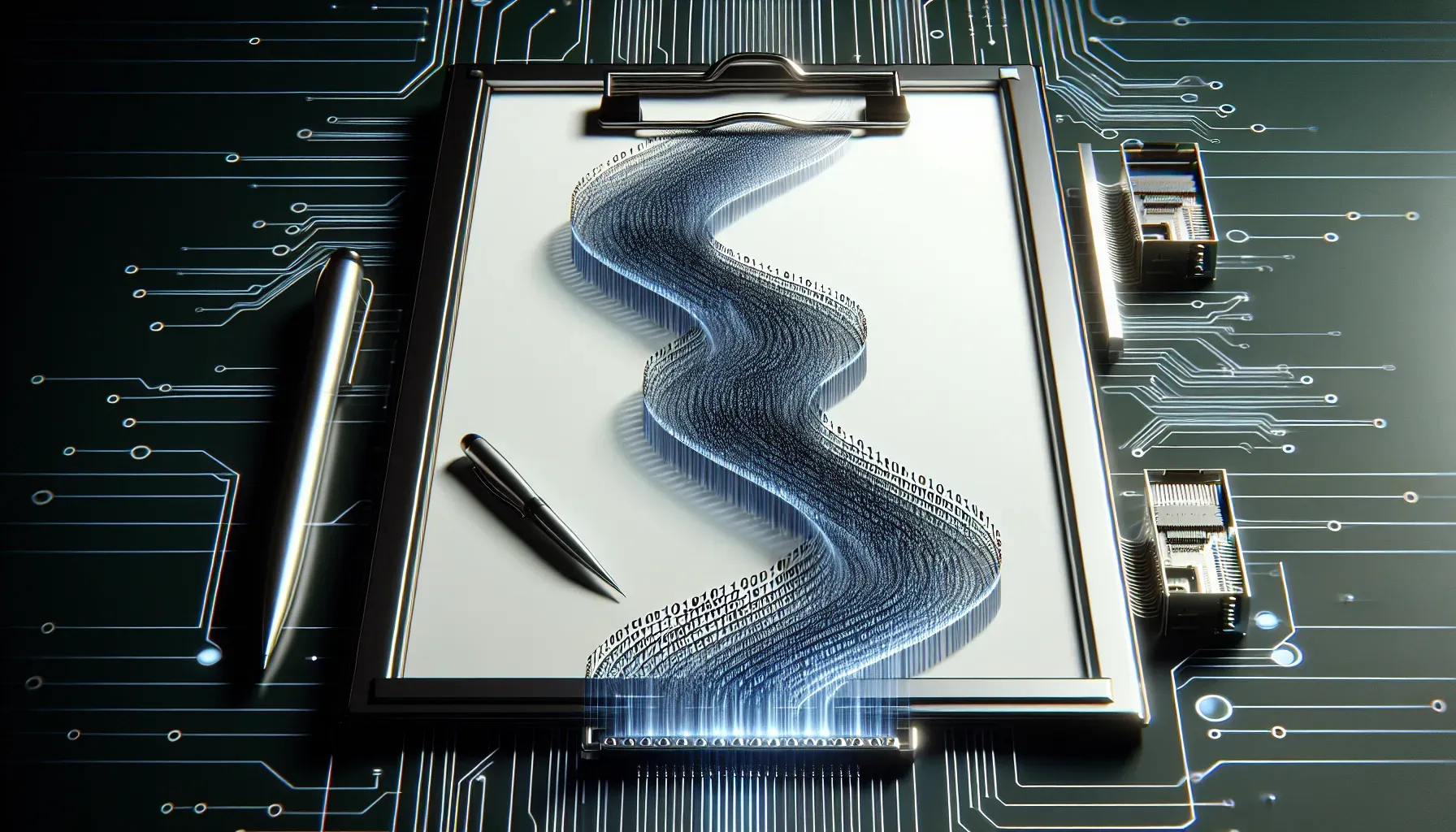
Rediscovery of the Clipboard
Consider the simple act of copying text on your computer. It's a practice so commonplace that we rarely think twice about it. Yet, this basic function owes its existence to a humble ancestor: the physical clipboard. From office desks to drafting tables, the clipboard has been a steadfast companion in organizing ideas and facilitating information transfer. As our world has evolved, so has this unassuming tool, morphing into an invisible powerhouse of digital efficiency.
From Wood to Windows
The origins of the clipboard are as analog as they come. Originally a wooden board with a clip, it was designed to hold paper firmly in place. It evolved into an essential organizational tool, allowing quick access and easy handling of documents. This simple concept—hold, carry, access—translated seamlessly into the digital realm with the advent of modern computing.
With the birth of the digital clipboard, the metaphorical bars were raised. No longer restricted to mere sheets of paper, the virtual clipboard enabled the copying and pasting of data, text, images, and even complex objects between programs. As software development pushed forward, the clipboard adopted multi-item capabilities and smart functionality. Users could now juggle vast amounts of information effortlessly through features like clipboard history and synchronization across devices.
A Seamless Extension of Thought
Take, for example, the productivity software suite Qonto. In a world where financial information is critical and time-sensitive, Qonto integrates clipboard functionality to enhance user interaction. It allows users to copy and paste transaction details swiftly, reducing manual errors and improving workflow efficiency. This exemplifies how the clipboard is not merely a tool but an augmentation of human capability, serving as a seamless extension of thought and interaction between diverse systems.
Reframing the Clipboard's Genius
At its core, the clipboard represents more than just a cut-and-paste function. It is an adaptive bridge between human cognition and technological processing. The clipboard reframes our interaction with technology, transforming the way we manage and manipulate data. It showcases our innate desire to simplify complexity and optimize productivity.
The clipboard's genius lies in its ability to make information ephemeral yet accessible, balancing permanence and transience in perfect harmony. When something is copied, it enters a state of potential—a reversible action until something new takes its place. In this sense, the clipboard embodies a microcosm of innovation: it’s not just about storage, but about the fluidity of ideas and the ease of transformation.
Patterns of Progress
The evolution of the clipboard from a piece of office equipment to a cornerstone of digital interface reveals an underlying pattern of human problem solving. We consistently seek ways to enhance our intellectual toolkit, augmenting natural capabilities with well-designed systems. The digital clipboard, often overshadowed by flashier technology, remains a testament to ingenious simplicity—a quiet yet fundamental partner in the evolution of how we think and work.
In observing the clipboard, we grasp a clearer picture of human development intertwined with technological advancement. It reminds us that innovation does not always arrive with fanfare. Sometimes, it quietly improves the efficiency of everyday tasks, subtly redefining what it means to operate within a digital landscape. Through such hidden architectures, we continually shape and refine the interface between human potential and machine precision.