
The Unseen Algorithms of Urban Crosswalk Buttons
Discover how crosswalk buttons, seemingly trivial, reveal our complex relationship with technology and influence urban interaction.

Button Press and the Illusion of Control
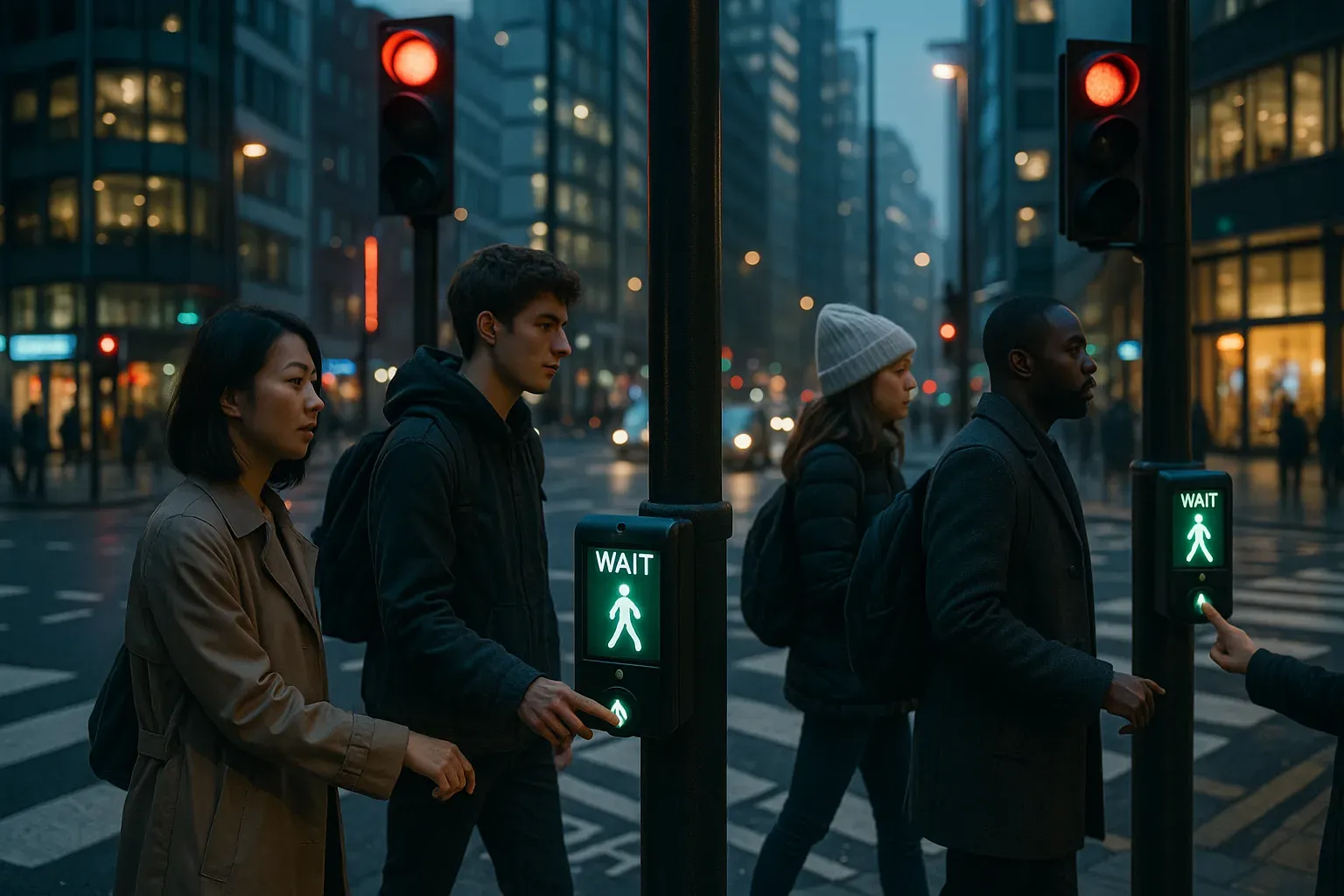
On a bustling city corner, a pedestrian pushes the crosswalk button and waits. The comforting click provides an illusion of influence over the flow of city life. However, many of these buttons are mere placebo devices, disconnected from the underlying systems that govern traffic lights. This small interaction reflects a broad spectrum of unspoken agreements between technology and human behavior.
The Crosswalk as a Mirror
Crosswalk buttons exemplify silent choreography within urban environments. While they seem to grant agency, their real influence varies. In some cities, outdated buttons remain, disconnected as traffic systems evolved. This revelation doesn't break trust, but reaffirms an unspoken contract: humans seek to assert control, and technology offers a semblance of participation.
Modern Interaction Examples
Consider Singapore's smart traffic management systems, where algorithms determine pedestrian lights, adapting to traffic density without requiring human input. Yet, buttons persist. This models a hybrid interaction where technology makes decisions but continues to involve us, maintaining engagement and ritual.
Trusting the System
The crosswalk button goes beyond urban planning to reflect our relationship with technology itself. We press buttons, tap screens, all driven by trust in complex systems we do not fully understand. This is not blind faith, but a negotiated trust, developed over successive interactions.
Reframing the Interaction
If we see crosswalk buttons as rituals more than instruments, we begin to appreciate them as part of our cognitive pattern. They serve as reminders of how our actions align with larger systems. Instead of asking whether buttons work, we might consider how they help synchronize individual and collective behavior.
A Larger View
As cities grow smarter, interactivity has shifted from manual to automated. Technology's algorithms run silently, shaping experiences without direct feedback. The crosswalk button symbolizes our innate desire to connect with these systems, humanizing technology to make it approachable.
Conclusion
Crosswalk buttons and their invisible algorithms teach us about participation in algorithmic design. They invite us to rethink how interactions, big or small, influence both our personal landscapes and the broader urban tapestry. In understanding them, we refine our perspective on the unperceived infrastructures shaping our daily lives.