
Inherited Silences: How the Things Our Families Never Said Shaped Who We Are
The absences in our upbringing leave a more permanent architecture than anything that was ever spoken aloud.

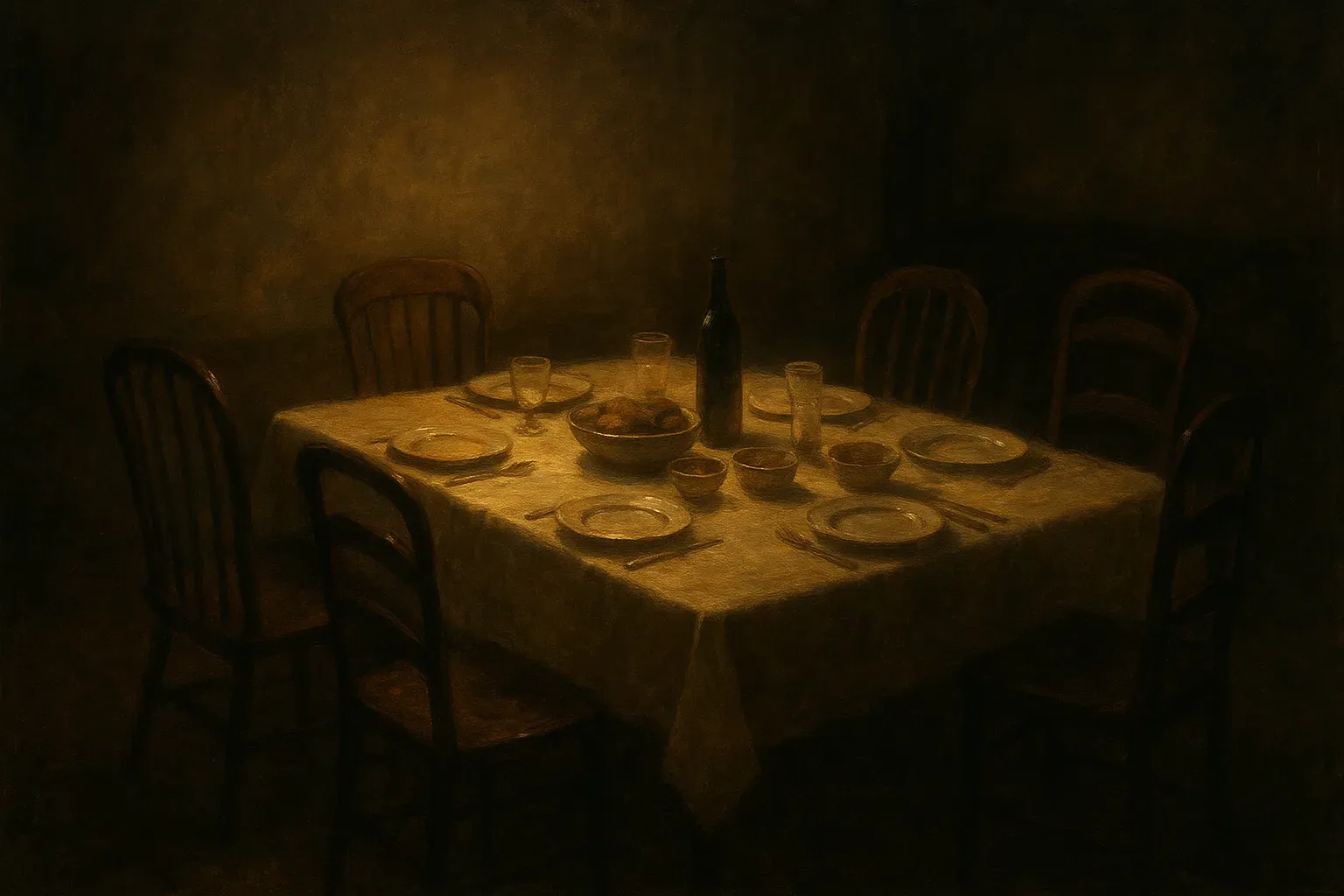
The Grammar of What Was Never Said
There is a particular kind of inheritance that arrives without ceremony. No document is signed, no object changes hands. It passes through the body before the mind has any language for it. It is the silence of a parent who never spoke about their childhood. The subject that shifted the air in the room and caused everyone to look briefly at their plates. The grief that was never named because naming it would have meant admitting it existed. These are the silences that built us, quietly and without our consent, the way water shapes stone over long, patient years.
We tend to think of our formation in terms of what happened to us. The stories we were told, the lessons delivered, the corrections made. But the absences are just as instructive. Perhaps more so, because they operate beneath articulation. A child does not think, my family never discusses failure, and so I have internalized shame around imperfection. They simply grow up feeling the weight of something they cannot name, something that governs their behavior with the authority of a rule they were never taught but somehow always knew.
The Architecture of Omission
Philosophers of language have long understood that meaning lives as much in what is not said as in what is. Ludwig Wittgenstein wrote that the limits of my language mean the limits of my world. What he perhaps did not say outright, though it follows naturally, is that the limits of our family's language become, for a time, the limits of our inner life. If love was never spoken in your home, you do not simply lack the word. You may lack the felt sense of what it means to be loved without condition, and spend decades searching for a definition your body can finally accept.
Families develop their own grammars of omission. Certain topics become structurally invisible. Death. Money. Mental illness. Affairs. Addiction. These are not absent because they were unimportant. They are absent because they were too important, too threatening, too close to some fault line that the family had agreed, collectively and without a meeting, not to approach. And so the next generation inherits not the thing itself, but the shape of the thing. They learn to flinch without knowing why. They feel the boundary without ever having been shown where it lies.
What the Body Remembers
The psychologist Bessel van der Kolk spent decades documenting how trauma lives not primarily in memory but in the body, in posture, in breath, in the involuntary clench of muscle before the mind has registered a threat. This insight extends into the intergenerational realm. We absorb our family's unspoken anxieties through proximity, through the quality of attention, through what we were distracted from and what we were quietly encouraged not to look at too closely.
There is a word in German, Familienaufstellung, sometimes translated as family constellation, used in certain therapeutic traditions to describe the way unresolved material in one generation arranges itself, like furniture in a room, in the lives of those who come after. You walk into the room without ever seeing the original layout, and yet you navigate around the furniture anyway, unconsciously honoring the obstacles that no longer need to be there.
Learning to Speak What Was Unspoken
The work of adulthood, in part, is learning to see the furniture. This is not a comfortable process. It requires a willingness to look at the people who raised us not only as parents but as people, as beings who were themselves shaped by silences they never examined, handed down to them from their own kitchens and living rooms and long car rides where no one said the thing that needed saying.
This does not mean dissolving into blame, theirs or ours. Blame is rarely the point. The point is recognition. The moment you trace a pattern in yourself back to an absence in your family history, something loosens. The pattern does not vanish, but it ceases to feel like fate. It begins to feel like weather, something that came before you and that you can, with patience and attention, learn to dress for.
There is also something quietly profound in the act of speaking what your family could not. Not as performance or accusation, but as completion. To say the word they could not say. To grieve the thing they carried in silence. To tell your children something your grandparents kept locked in a room with the key thrown away. This is one of the gentlest forms of healing available to us, and it costs nothing except the willingness to begin.
The Conversation That Continues
We are all, in some measure, the unfinished sentences of the people who raised us. The absences they left do not disappear simply because we become adults and move through the world with some appearance of coherence. They remain, embedded in our habits and our hungers, in the way we struggle to ask for help or cannot seem to receive care without suspicion.
But sentences can be finished. Slowly, imperfectly, and often in the middle of an ordinary day when something small and unremarkable suddenly illuminates the whole. The silence was never the end of the story. It was always just the place where we had to learn to begin speaking for ourselves.