
Elevators: Vertical Pathways to Social Interaction
How elevators quietly shape the rhythm of urban social life by redefining interaction in vertical spaces.

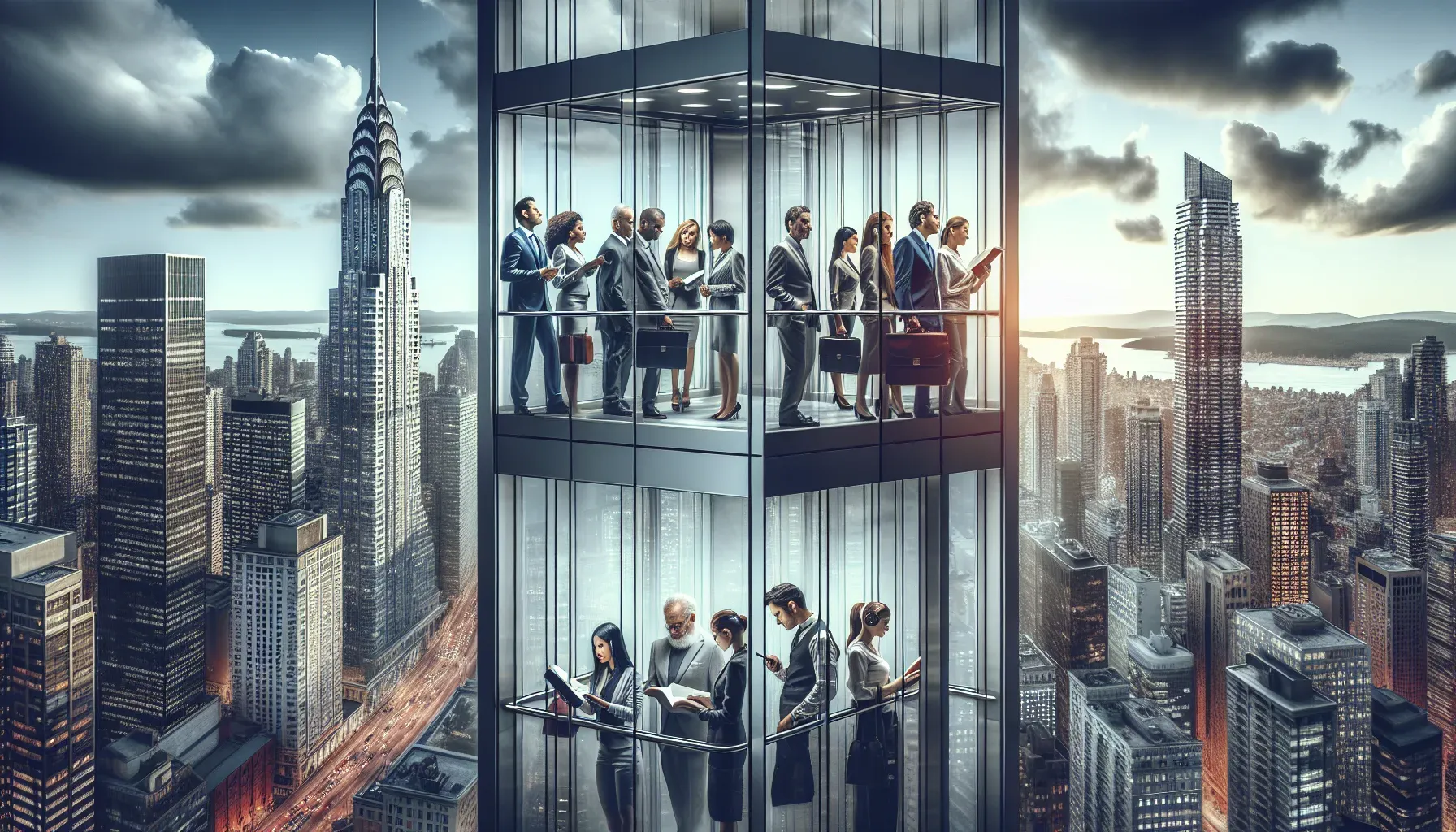
Ascending Together
Imagine the soft ping of an elevator door, followed by shuffling footsteps mixing with polite nods and brief smiles. It’s a scene many urban dwellers experience daily, a simple yet telling choreography of life compressed into a metal box. Silent rides up and down skyscrapers represent both an architectural solution and a subtle journey into social dynamics. The elevator, an often overlooked marvel, quietly shapes urban behavior through its orchestration of vertical encounters.
The Elevator's Unseen Network
Elevators create points of contact in high-rise environments where people live stacked upon one another. This vertical movement system brings diverse individuals into shared physical space, providing moments of potential social interaction. Compare this with public transportation where journeys are horizontal; elevators distill the essence of transit into brief, intimate interactions.
Consider the modern office building where the daily use of elevators governs not only flow but a rhythm of connection. These are unscheduled, unstructured gatherings, a stark contrast to scheduled meetings in conference rooms. People share brief updates, exchange glances, and absorb social cues, all while being ferried between floors. Collectively, these moments tell a story of modern urban living.
Vertical Community Formation
In residential towers, the elevator serves as a community node. It’s where neighbors meet and acknowledge each other, forming an unspoken understanding of shared habitation. The brief journey is an opportunity for spontaneous greetings or the casual confirmation of familiar faces, fostering a unique type of community connection.
Such vertical interactions are pivotal in densely built environments. Unlike sidewalks or gathering plazas, elevators encourage connections by design—offering a micro-environment where social norms are influenced by the mechanics of vertical transportation. They redefine the understanding of neighborhood without the traditional boundaries defined by streets and blocks.
Rethinking Vertical Spaces
While elevators primarily serve a functional role, they also invite reevaluation of how vertical spaces influence human relations. They manage to compress the expanse of a building into a smaller scale, offering a lens through which social behavior is reframed. In this sense, they challenge the preconception of buildings as mere static entities by highlighting their dynamic role in fostering communal interactions.
From a conceptual standpoint, elevators turn structural verticality into an architectural narrative. As the world leans towards megacities and upward growth, understanding and reframing these vertical pathways becomes increasingly important. These moments of elevation—literal and social—create rhythms and structures in people’s lives, subtly shaping communities from the inside-out.
The Modern Elevator Conversation
A contemporary example comes from Tokyo's Roppongi Hills Mori Tower. Frequented by business professionals and tourists alike, its elevators not only transport people but serve as a stage for spontaneous networking—a representation of global interconnectedness reflected within its vertical confines.
This transformation of elevator space into a venue for connection offers a fascinating insight into human development. As urban architecture pushes toward new heights, the way vertical movement is utilized can redefine social landscapes. With skyscrapers climbing ever higher, the elevator, an engineering necessity, continues to play a quiet but pivotal role in reimagining interactions, sustaining urban sociability in an age often accused of digital isolation.
Elevators remind us that even in fleeting moments, human connection occurs not only in the design of our cities but in their very elevation.