
The Slow Disappearance of Boredom and What We Lost When It Left
Boredom was never emptiness waiting to be filled. It was a productive suffering that civilisations were quietly built upon.

The Texture of Waiting
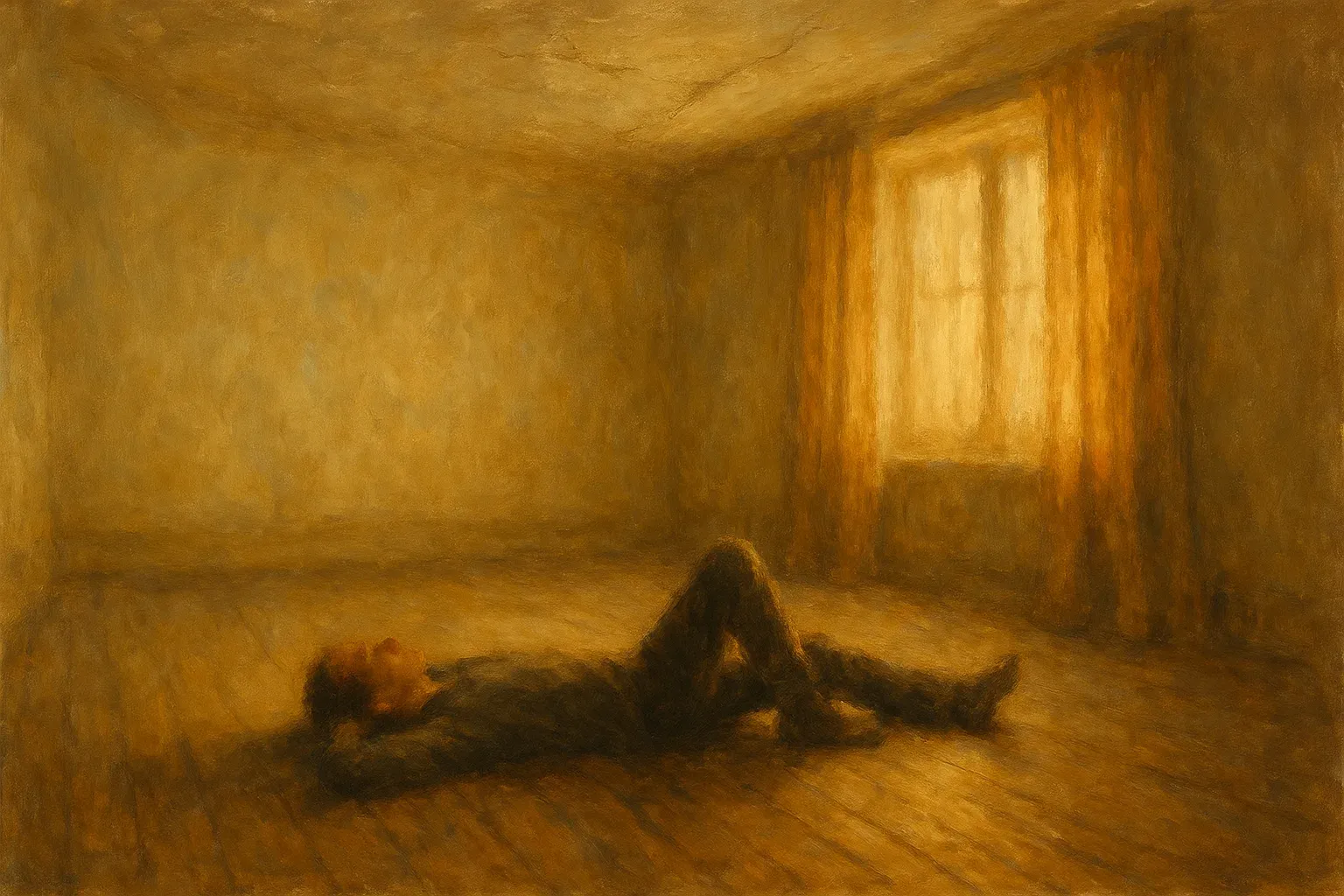
There was a particular kind of afternoon that used to exist. You know the one. A Sunday in late summer, the house still, nowhere to be, nothing demanding your attention, and yet no means of escape from the slow, pressing weight of your own unoccupied mind. The ceiling had every crack memorised. The clock moved with theatrical slowness. And somewhere inside that mild, itching discomfort, something was happening that you could not quite name.
We called it boredom. We treated it like a minor ailment. We never considered that it might have been one of the more important conditions a human being could find themselves in.
A State With a History
Boredom, as a named psychological experience, is surprisingly modern. The word itself gains cultural traction in the nineteenth century, arriving alongside industrialisation, the standardisation of time, and the peculiar new anxiety of leisure. Before that, the closest approximation lived in the older religious concept of acedia, a spiritual torpor described by medieval monks as a noonday demon that drained the soul of purpose and presence. The desert fathers wrote of it with genuine dread. It was not laziness. It was something stranger, a kind of weightless suffering that refused to attach itself to any particular cause.
What both the monk staring at the monastery wall and the child staring at the ceiling shared was enforced interiority. With no stimulus to consume, the mind turned inward. And inward, it turned restless, searching, generative. The discomfort of boredom was always the friction of a mind bumping against the walls of itself, and that friction, given time, produced heat.
What the Empty Moment Made
Consider how many things were born in unoccupied time. Newton, famously, watching an apple in a garden with nothing else to do. Einstein conducting thought experiments during slow stretches at the patent office. Countless composers, writers, mathematicians who spoke of their most significant ideas arriving not during focused work but in the fallow spaces between it, on walks, in baths, in the drift before sleep. These were not coincidences. They were the brain doing what the brain does when the noise clears, forming connections across distances, holding contradictions in suspension long enough for something new to crystallise.
Boredom was the precondition. Not the inspiration itself, but the particular silence in which inspiration could be heard.
The Infinite Scroll as Sedative
We have now engineered boredom nearly out of existence. Every idle moment has a remedy available within arm's reach. A waiting room, a bus journey, a pause between conversations, all of them now filled with the warm, immediate light of a screen. The content is not even always interesting. Often we consume it without pleasure, without retention, without anything we could honestly call satisfaction. But it fills the space. It keeps the silence from forming.
This is not simply a generational complaint about technology. The deeper concern is neurological and existential at once. When we eliminate the experience of having nothing to do, we also eliminate the particular cognitive state that unoccupied time produces. The wandering mind is not a wasted mind. Research into what neuroscientists call the default mode network suggests that when the brain is not focused on an external task, it shifts into a different mode of processing, integrating experience, rehearsing social scenarios, imagining futures, making meaning from memory. Boredom, it turns out, was when the brain was doing its other work.
We have replaced that work with input. Endless, frictionless, consequence-free input. And the cost is not immediately visible, because the replacement feels better. That is precisely the problem.
The Productive Suffering We Abandoned
There is a Kierkegaard passage worth sitting with. He wrote that the gods punished humanity not with suffering but with boredom, and that from that punishment, all of human culture arose. The theatre, the feast, the story told around a fire, even philosophy itself. All of it reaching toward something to fill the unbearable awareness of one's own existence without distraction.
He was being only partially ironic. The impulse to create is inseparable from the impulse to escape a particular inner discomfort. Art comes from somewhere that ease cannot reach. And if we smooth away all discomfort, if we medicate every idle moment with stimulation, we may find that we have also smoothed away the conditions under which our most interesting thoughts were capable of forming.
Learning to Sit Again
This is not a call to abandon technology, or to perform suffering for its own sake. It is something quieter than that. It is an invitation to occasionally leave the gap unfilled. To let the mind wander without directing it. To sit with the low-grade discomfort of having nothing to look at, nothing to consume, nothing arriving to relieve you.
The ceiling still has its cracks. The clock still moves. And somewhere in that particular, almost forgotten quality of afternoon, the mind you have been too busy to meet is still there, still restless, still reaching toward something it cannot quite name.
That reaching was never a problem. It was the point.