
The Quantum Mind: Bridging Neuroscience and Quantum Physics
Explore how quantum mechanics might illuminate the mysteries of human consciousness.

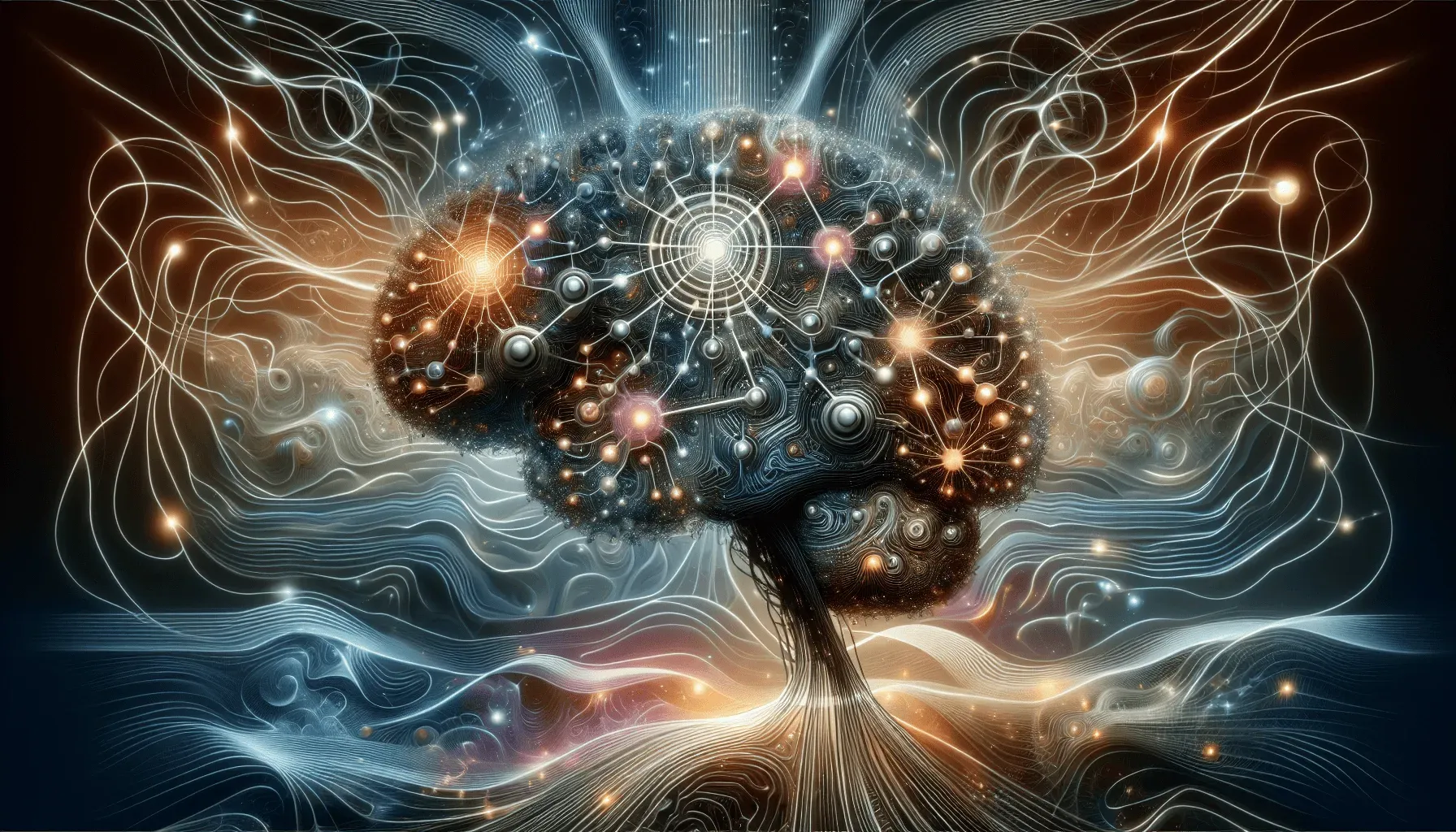
A Leaf's Microcosm
Imagine a single leaf floating gracefully down a stream, its undulating path influenced by unseen currents. This simple moment mirrors the complexity of the mind and its dependence on both tangible and invisible forces. As scientists delve deeper into the nature of consciousness, a curious hypothesis arises: the human mind may be a quantum phenomenon.
Exploring Quantum Consciousness
Recent studies suggest a possible overlap between quantum mechanics and human consciousness, proposing that the brain operates on a level that is not entirely classical. This idea finds roots in the intricate processes of decision-making and cognition. Consider the concept of superposition. In the world of particles, things exist in multiple states until observed; similarly, the human mind traverses numerous potential pathways before arriving at a conscious decision.
Modern Inroads into Quantum Theories
The working model of neural correlates of consciousness presents an ideal scenario for melding minds with quantum theories. Advanced devices, such as quantum computers, demonstrate parallel computing using qubits. While significantly more sophisticated than the neurons exchanging neurotransmitters, both systems share parallelism and entanglement principles. These features lead us to wonder whether cognition and conscious experience might operate through similar ephemeral connections.
A Modern Example
In the realm of neuromorphic computing, projects like IBM's TrueNorth chip experiment with creating human-like brain functions through artificial neural networks. These intricate models mimic human neural architecture by simulating billions of synapses digitally, offering a glimpse into the non-linear dynamics inherent in our minds. Such efforts underscore how understanding the quantum potential of consciousness could guide intelligent system design.
Reframing Human Understanding
Traditionally, consciousness has been perceived as a linear cascade of neuronal firing. However, viewing the mind as a quantum system allows for a perspective that it might function beyond simplistic cause and effect. This reframing introduces a fresh lens, wherein consciousness is a multi-dimensional field impacted by various entangled possibilities rather than a singular thread.
The Broader Insight
As the conceptual boundaries between science and philosophy blur, technology may begin to reflect these revelations. If we accept that our consciousness is quantum in nature, embracing this complexity might inspire approaches to artificial systems that mimic the nuanced, nonlinear nature of the human mind. Furthermore, it invites a philosophical turn, prompting questions about identity, free will, and the true nature of being.
Widening the Lens
The convergence of quantum mechanics and neuroscience does more than just paint a new picture of consciousness. It offers a reminder that our understanding of the world is ever-evolving, limited only by our curiosity and imagination. In reconciling the mysteries of quantum physics with the intricate dance of neurons, we edge closer to an integrated knowledge system where the mind is both a result and a creator of its reality.