
The Museum of Small Rituals: How Repetition Becomes Meaning Without Permission
The way you make your morning coffee is not merely habit. It is a private liturgy you wrote without knowing you were writing it.

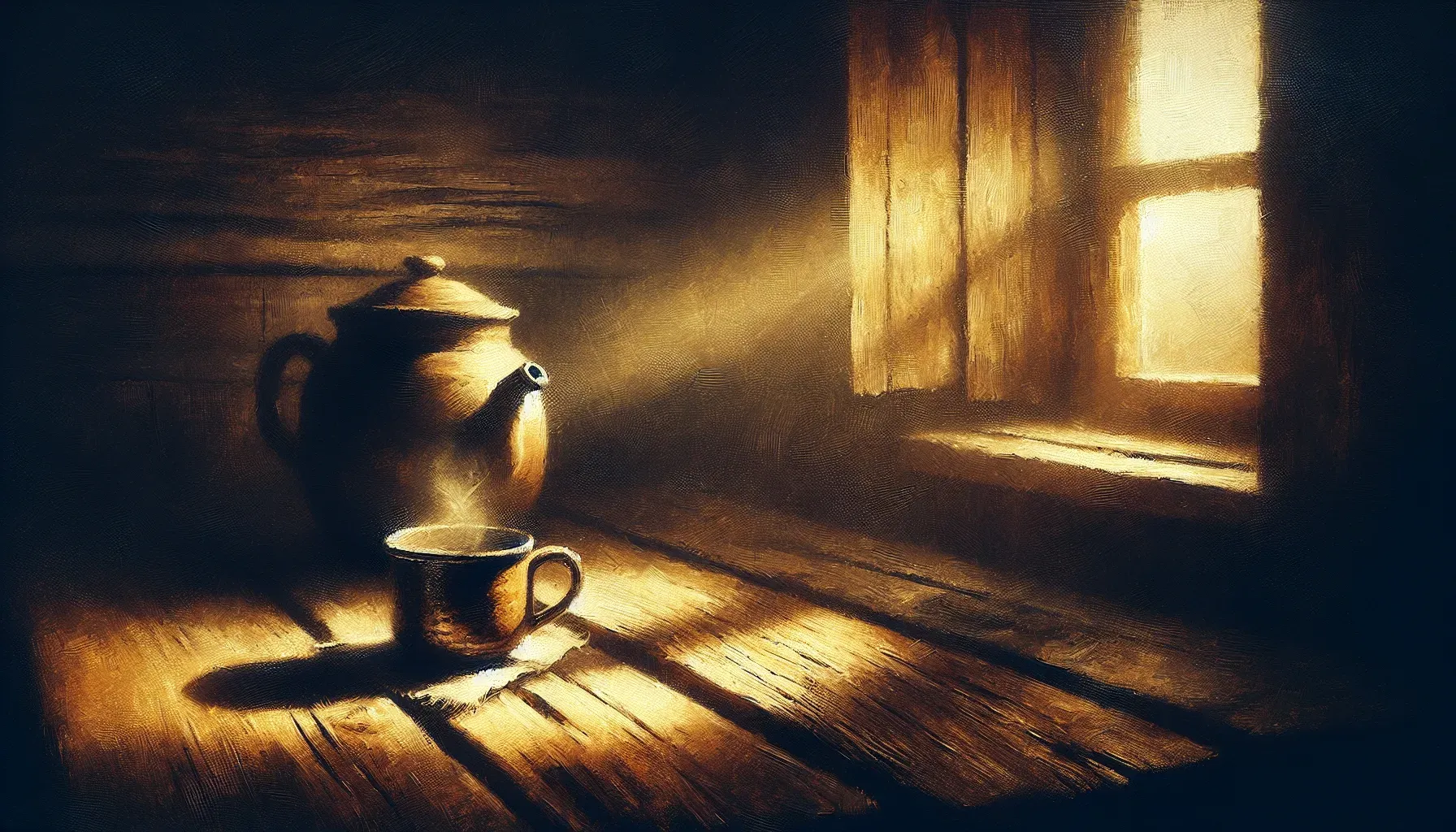
The Altar You Did Not Know You Built
There is a particular order to the way you do it. The cup placed before the water is heated. The window checked, briefly, before anything else. The same spot at the counter, the same pause while waiting, the same first sip taken standing up rather than sitting down. You would not describe any of this as meaningful. You might not even notice you do it. And yet, if someone disrupted the sequence, if they handed you the cup too early or moved the kettle to the wrong burner, something in you would register a quiet wrongness, a small interior protest that has no name but feels remarkably like the feeling of a word mispronounced in a prayer.
This is where meaning hides when it does not want to be examined. Not in the grand gestures or the declared intentions, but in the grooves of repetition, in the unwitnessed choreography of ordinary mornings.
Repetition as a Kind of Writing
Anthropologists have long observed that ritual is not simply action performed repeatedly. It is action invested with weight, with before and after, with a sense that the doing of it marks something true about the world. The ceremonies of formal religion share their bones with the ceremonies of the kitchen and the commute. They both operate on the same principle: that meaning is not found but made, and that one of the most reliable tools for making it is the patient accumulation of repeated form.
The philosopher Catherine Bell wrote about how ritual works not by encoding pre-existing beliefs but by generating them. The act produces the meaning, not the other way around. We light the candle and only then begin to understand what we believe about light. We keep returning to the same bench in the park and slowly, without announcement, it becomes our bench, a place that holds something of us.
Most people, if asked, would say their small daily rituals are mere efficiency or habit. But efficiency rarely explains the specific and stubborn attachment to a particular mug, or the way a certain song at a certain volume on a certain kind of morning can feel almost ceremonial. We are doing more than we admit. We are authoring something, line by repeated line.
The Museum Inside the Ordinary
Imagine, for a moment, collecting your small rituals the way a museum collects objects. Not to display them under glass with explanatory cards, but simply to see them gathered together in one room. The pre-sleep ritual of checking doors. The way a birthday feels incomplete without a specific, private gesture you have performed since childhood. The exact route walked not because it is shortest but because it passes the right tree, the one that looks different in every season.
Held up to the light, these small forms reveal something that grand experiences often obscure. They show us what we actually value rather than what we say we value. They are truer than our stated beliefs because they were never edited. They accumulated in the absence of self-consciousness, which is the only condition under which something genuinely personal can grow.
There is a kind of self-knowledge available in this museum that no amount of journaling or therapy necessarily reaches. Not because those things lack value, but because the rituals are pre-verbal. They were formed in the body and in the rhythm of days before they were ever thought about. They are knowledge of a different texture.
The Permission You Never Needed
What is remarkable about personal ritual is that it requires no authority to validate it. No tradition signs off on the meaning of your particular coffee sequence. No institution decides that the way you say goodbye to someone you love, the specific gesture you have developed over years of loving them, constitutes a meaningful act. It simply is one, because repetition and attention and feeling have made it so.
This is quietly radical. In a culture that tends to locate significance in the exceptional, in the landmark event, the achievement, the singular experience, personal ritual insists that meaning is also available in the recurring, the quiet, the unremarkable to everyone but you. It is a form of meaning-making that resists commodification precisely because it cannot be transferred. You cannot buy someone else's ritual. You can only slowly, patiently, build your own.
The philosopher Gaston Bachelard wrote that the house protects the dreamer and allows the dreamer to dream in peace. What he understood is that certain containers, certain forms, create conditions in which the interior life can breathe. Personal ritual is that kind of container. It is the architecture of an ordinary life that holds more than it appears to hold.
Attending to What Attends to Us
To notice your own small rituals is not a project of nostalgia or self-indulgence. It is a practice of honest attention. It is asking: what, in the repetition of my days, have I quietly decided matters? What have I been saying, in the language of action and return, without ever finding the words for it?
The morning coffee is cooling. The particular light of this particular hour is doing what it always does at this hour. And you are standing exactly where you always stand, participating in a liturgy you wrote yourself, in the only language that needed no translation because it was always already yours.