
On Loving What You Cannot Master: A Philosophy of Perpetual Beginnership
There is a species of devotion that only becomes available to you when you stop needing to be good at the thing you love.

The Devotion Without Reward
There is a species of devotion that only becomes available to you when you stop needing to be good at the thing you love. It is quieter than ambition, less photogenic than mastery, and it carries no promise of arrival. Most people never find it, not because they lack the capacity, but because they are too busy measuring themselves against some imagined standard of competence to notice the door standing open beside them.
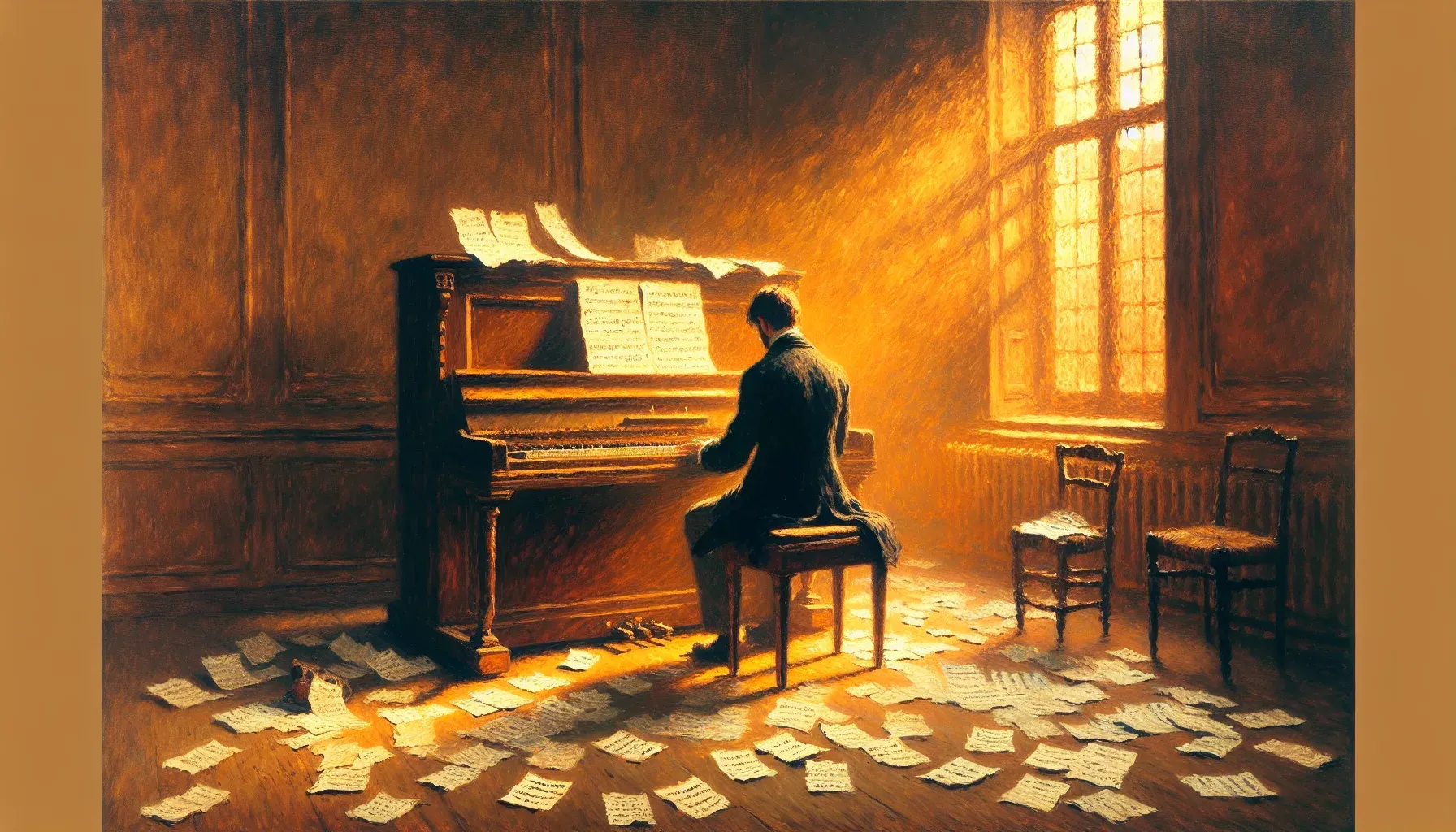
I have been playing piano, poorly, for most of my adult life. Not poorly in the charming way that invites encouragement, but poorly in the way that plateaus early and stays there. I know enough to understand what I cannot do. I know enough to hear the gap between what my fingers produce and what the music wants to be. And yet I return to it, week after week, because somewhere in that gap lives something that feels more honest than most things I do well.
What Mastery Costs
We tend to speak of mastery as liberation. Ten thousand hours, and you will be free. The thinking goes that competence removes friction, that skill dissolves the distance between intention and execution, and that somewhere on the far side of practice lies a fluency so complete it feels like flying. There is truth in this. Ask anyone who has spent decades inside a craft. They will describe moments of grace that beginners simply cannot access.
But mastery costs something that rarely appears in its accounting. It costs the particular quality of attention that only uncertainty can produce. When you are good at something, you stop seeing it in full. You begin to navigate by memory, by muscle, by pattern recognition so refined it bypasses conscious perception entirely. This is efficient. It is also, in certain ways, a kind of forgetting.
The Japanese aesthetic concept of shoshin, the beginner's mind, points precisely at this tension. Shunryu Suzuki wrote that in the beginner's mind there are many possibilities, but in the expert's mind there are few. He was not disparaging expertise. He was describing a trade. The expert trades wonder for precision. Sometimes that is the right trade. But it is always a trade.
The Practice of Not Arriving
What I have found, in my years of mediocre piano playing and similarly unspectacular attempts at drawing, at spoken language learning, at understanding music theory properly, is that the experience of perpetual beginnership carries its own rewards. They are not the rewards culture tends to celebrate. There is no portfolio, no credential, no moment where the room turns to look at you with new eyes. The rewards are interior, and they are strange.
There is, first, the reward of full presence. When you cannot rely on competence, you must pay attention. Every session is slightly unfamiliar territory. You cannot coast. This enforced attentiveness turns out to be a form of meditation, one that arrives without having to be arranged or scheduled, embedded inside the activity itself.
There is, second, the reward of process made visible. When you are not trying to arrive anywhere, the journey becomes the entire content of the experience. You notice things. You notice which parts of a piece feel like moving through water and which parts open briefly into something easier. You notice the strange way a chord can feel like a color, or a memory, or a weather system. These notations accumulate into a private and unrepeatable relationship with the material, one that belongs entirely to you because you built it slowly, without the shortcut of talent.
The Philosophy of the Devoted Amateur
The word amateur comes from the Latin amare, to love. An amateur is, at root, one who does a thing for love. Somewhere along the way, the word acquired a residue of apology, a suggestion of insufficiency. To call someone an amateur is to locate them below the threshold of seriousness. But the original meaning holds a different kind of dignity.
To love something you cannot master is to love it without transaction. There is no exchange of devotion for reward. The thing will not give you what expertise gives. It will not make you impressive, or efficient, or safe from the anxiety of the blank page and the wrong note. What it will do is remain genuinely other to you. It will resist you enough to keep you curious. And curiosity, sustained across years rather than ignited and spent in a single burst of early enthusiasm, is one of the quieter forms of a life lived well.
Albert Camus wrote that one must imagine Sisyphus happy. He was speaking about the embrace of a struggle that never resolves. There is something of the same logic here. The perpetual beginner does not win. The mountain does not flatten. But the returning to it, the choosing it again and again without the guarantee of progress, becomes its own kind of answer to the question of how to spend a life.
Staying at the Threshold
Perhaps what perpetual beginnership ultimately teaches is that the threshold is not a place you pass through on your way to somewhere else. It is a place you can choose to inhabit. The threshold keeps you honest. It keeps you attending. It keeps you, in the most useful sense, a student of the thing you love rather than its owner.
There is a kind of freedom in that. Not the freedom of mastery, not the ease of the expert hand, but the freedom of someone who has nothing to prove and everything to discover, returning faithfully to the thing that will never quite be theirs, and finding, in that incompleteness, something that holds.