From Vine to Virtual: Wine Tasting in the Digital Era
How technology is reshaping the timeless practice of wine tasting, merging tradition with innovation.

Virtual Vineyard Journeys
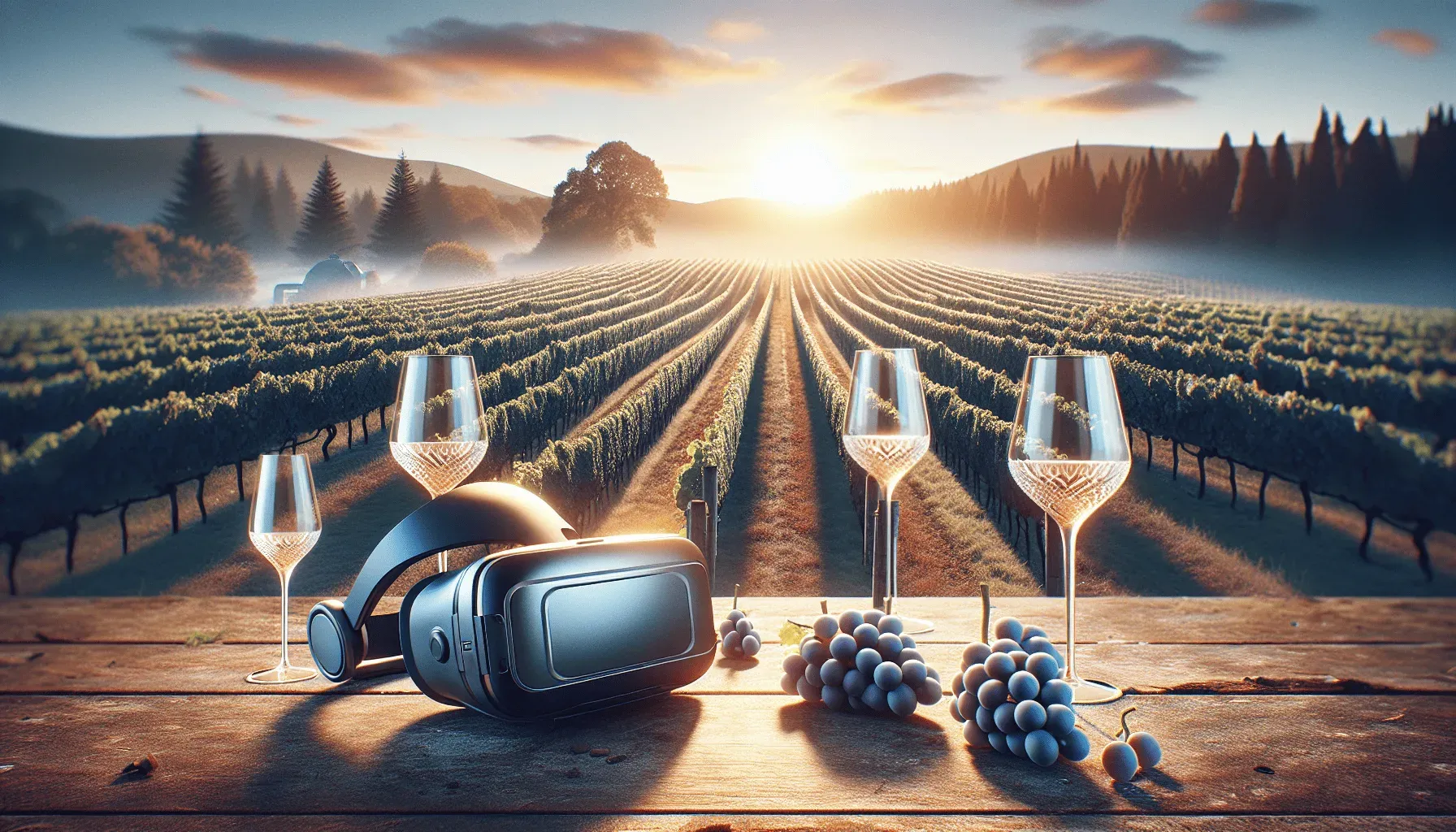
The soft glow of a screen illuminates the room as a group of friends gathers for a unique experience. Instead of clinking glasses in a vineyard, they are immersed in the virtual landscape of a winery tour. With VR headsets on, they explore the rolling hills of Napa Valley from their living rooms, guided by a digital sommelier explaining grape varietals and soil complexities.
The Intersection of Tradition and Technology
This tangible moment of shared digital experience marks a significant shift in how we engage with a centuries-old tradition. Wine tasting, a sensory ritual deeply rooted in physical presence and subtlety, finds itself enhanced and transformed through modern technology. The sensory is now mingled with sensory simulated, creating unprecedented dimensions of accessibility and exploration.
Example: Vivino's Data Driven Palate
A practical intersection of technology with wine culture is seen in apps like Vivino. By harnessing user-generated data and algorithms, Vivino personalizes wine recommendations tailored to individual tastes. Users simply snap a photo of a wine label, and the app reveals a trove of information—from taste profiles to user reviews. This bridges personal knowledge gaps, offering a glimpse into sophisticated flavors without years of study.
Enhanced Human Experience
The digital enhancement of wine tasting does more than democratize access. It reshapes the narrative we have around learning itself. Traditionally, acquiring knowledge about wine required years of cultivation—now, digital tools compress this timeline, allowing enthusiasts to cultivate taste through curated experiences. This acceleration of learning exemplifies how technology augments human capacity, reinforcing the notion that taste, once largely subjective, can be systematically explored.
Reframing Sensory Experiences
One might reframe this digital intervention not merely as a convenience but as an evolution in how we perceive sensory education. By integrating augmented and virtual realities, and leveraging data, we define new spaces where taste adapts, living both in the tangible and in digital representation. This positions wine tasting as part of a broader movement toward experiential learning, where technology acts as an enabler rather than a barrier to authentic experience.
Widening the Lens
Wine tasting's digital transformation invites us to reevaluate the boundaries between tradition and innovation. It exemplifies a seamless blend of past richness with future possibilities, embracing a quieter revolution in how cultural practices evolve. As we continue to bridge the experiential with the virtual, the essence of wine tasting—connection, discovery, and delight—remains intact, now with an uncharted horizon to explore.