
Beautiful Uselessness: A Defence of Things That Serve No Purpose Whatsoever
A civilisation that can only justify beauty by making it useful has already lost something it cannot name.

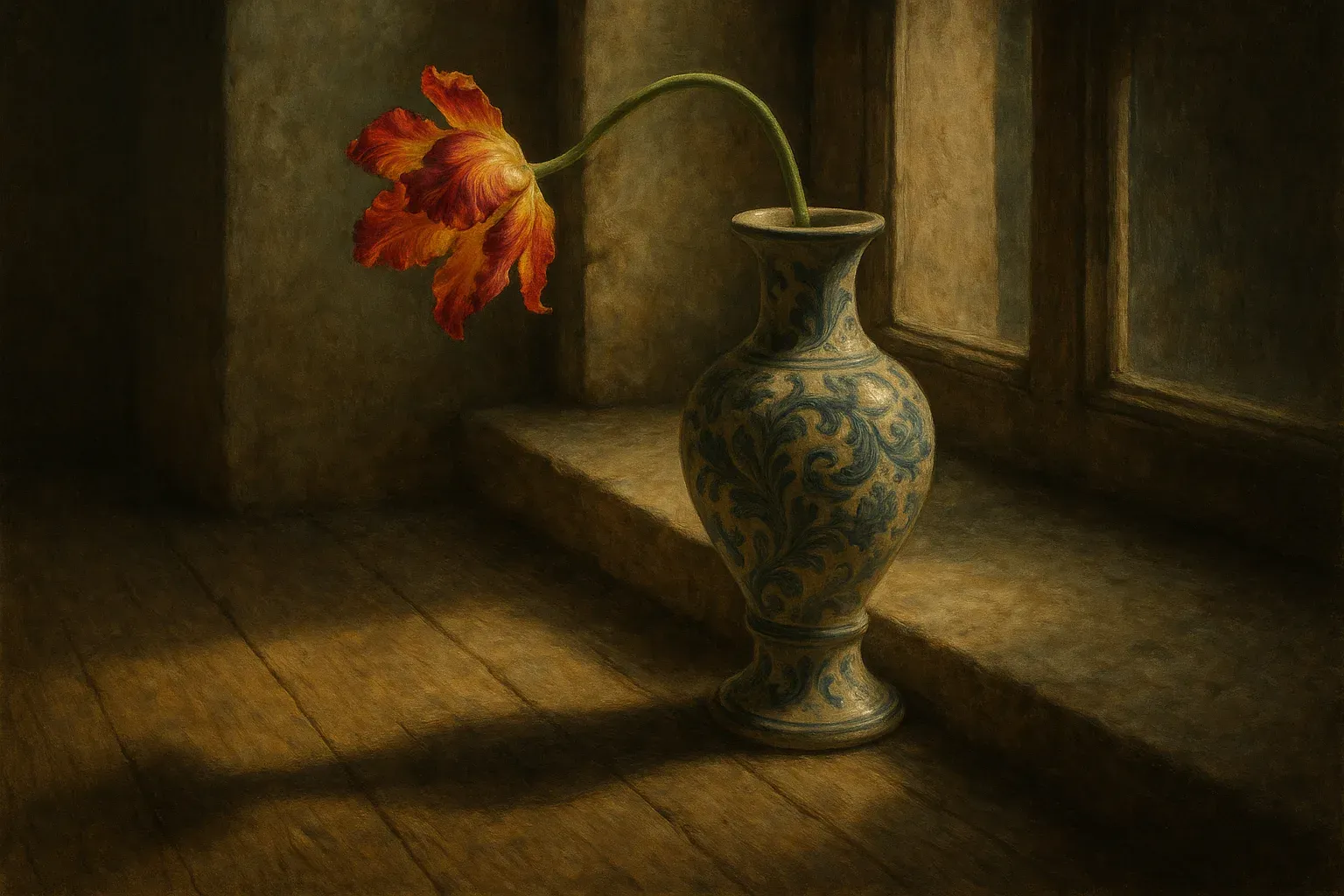
The Audit We Cannot Stop Running
Somewhere along the way, we began asking everything to justify itself. Not just our work, our habits, our relationships, though we ask plenty of those questions too. We began asking it of beauty. We began requiring that a thing which moves us also serve us, that wonder earn its keep, that the purely aesthetic experience come attached to some measurable return. Relaxation. Productivity. Wellness. We dress the useless up in useful clothing and call it progress.
But there is something corrosive in this bargain. A civilisation that can only justify beauty by making it useful has already lost something it cannot name, and the not-naming is part of the loss.
What Kant Knew at the Window
Kant, sitting somewhere in Königsberg with his famously clockwork life, offered philosophy one of its stranger and more important gifts. He called it disinterested pleasure, the experience of finding something beautiful without wanting to possess it, use it, or profit from it. The beautiful thing is not beautiful because it benefits you. It is beautiful because it simply is, and you are simply present to it.
This is not passivity. It is a rare kind of attention, one that resists consumption. When you stand before a painting and feel something shift in your chest, and that feeling does not translate into a caption or a lesson or a life hack, you have touched something genuinely resistant to the economy of use. The experience has no output. It does not optimise you. It just occurs, and you are changed in ways you cannot fully account for.
That unaccountability is the point.
The Useless Things We Actually Remember
Think back across your life to the moments that feel most alive in memory. Not the productive ones, not the efficient ones. The afternoon light falling through a kitchen window at an angle that made everything look briefly sacred. The song playing from another room that stopped you mid-step. The hour spent watching cloud formations with someone you loved, saying almost nothing, needing to say nothing.
None of these moments were useful. Not one of them built your career, improved your health metrics, or added anything to your personal development portfolio. And yet they are load-bearing walls in the architecture of who you are. Remove them and the structure of a life collapses into mere chronology, a sequence of events with no interior weather.
The useless beautiful is not decorative. It is structural.
Against the Instrumental View
The instrumental view of art and beauty is not new, but it has become newly aggressive. We justify public arts funding by measuring economic impact on local tourism. We recommend poetry for stress reduction. We prescribe nature walks as cognitive therapy. All of this may be true and good in its way, yet something is surrendered in the framing, a kind of categorical dignity that beauty once held on its own terms.
Oscar Wilde, never less than precise when he appeared to be merely provocative, wrote that all art is quite useless. He meant it as liberation, not critique. The uselessness of art is its freedom from obligation, its refusal to be conscripted into the service of anything other than itself. A painting that exists only to be beautiful is making a radical claim about the world: that being is sometimes enough. That presence needs no further argument.
We have grown suspicious of this claim. We live inside systems that reward justification, that fund what can be measured and defund what cannot. And so we have become a culture that enjoys beauty nervously, always with one eye on the return, always half-apologetic about the time we spend with things that give us nothing we can show for it.
The Practice of Purposeless Attention
There is a quiet discipline in learning to stay with the useless beautiful without reaching for utility. To sit with a piece of music not as background or therapy but as a complete event in itself. To read a poem without harvesting it for insights. To walk somewhere without tracking your steps or improving your cardiovascular health, just to see what the light is doing to the leaves this particular morning.
This is harder than it sounds in an age engineered for distraction and extraction. Everything around us is optimised for output. Attention itself has become a resource to be managed and monetised. Choosing to spend it on something that gives nothing back is, quietly, an act of resistance.
It is also, I would argue, an act of faith. Faith that the world contains more than can be weighed or used. Faith that you contain more than your productivity. Faith that beauty, in its stubbornly purposeless form, is pointing at something real about the nature of existence, something that cannot be captured in a framework, only recognised in a moment of honest attention.
What We Protect When We Protect the Useless
To defend beautiful uselessness is not to defend laziness or escapism. It is to defend a particular kind of seriousness, the seriousness that treats human experience as something more than a problem to be solved. It is to insist that a life needs not only direction and purpose but also room for things that simply are, that ask nothing of you, that meet you in your full and unproductive humanity.
The civilisation that loses this loses something beneath language, a felt sense of the world's abundance, a confidence that not everything must be earned or justified or turned to account. What remains, without it, is efficiency. And efficiency, however admirable, has never once made anyone feel that being alive was worth the trouble.