
Attention as a Moral Act: What We Choose to Notice and Why It Defines Us
Long before we act on our values, we have already declared them by deciding what is worth seeing.

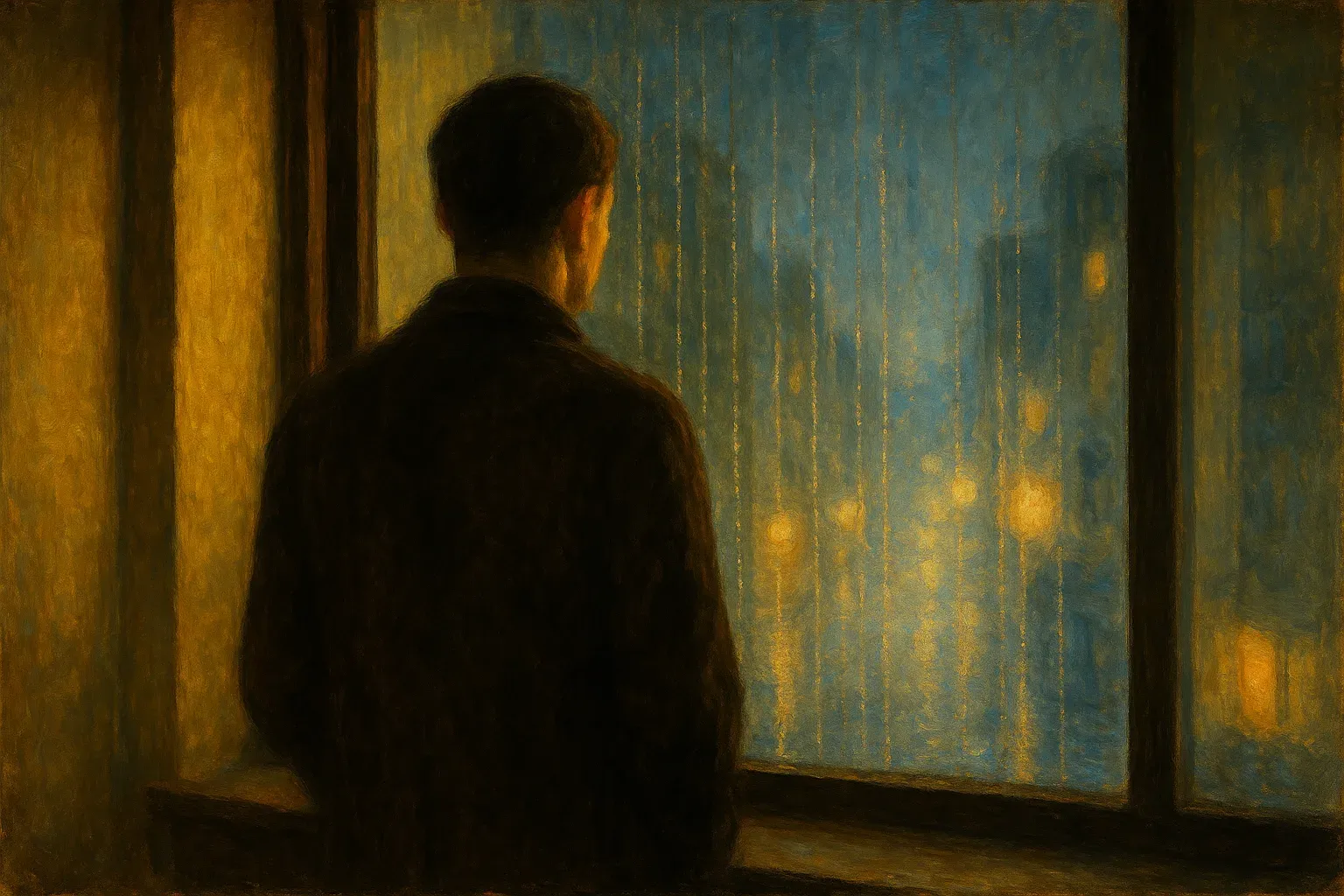
The Verdict Before the Act
There is a moment, repeated dozens of times each day, that most of us never pause to examine. It happens in the gap between the world presenting itself and our response to it. It is the moment of selective noticing, the quiet editorial decision where we choose, consciously or otherwise, what to admit into awareness and what to let pass by unregistered. We tend to think of morality as something that begins with action. But the deeper truth is that it begins here, in this prior and largely invisible act of attention.
Long before we reach into our pocket for a stranger, before we speak up or stay silent, before we extend warmth or withhold it, we have already cast a kind of vote. We have decided who and what is worth seeing. And in that decision, repeated across a lifetime, we are not simply filtering perception. We are constructing a self.
The Philosopher's Lens
Iris Murdoch, writing in the mid-twentieth century, offered one of the most quietly radical ideas in moral philosophy. She argued that the central act of morality is not choice in the dramatic sense, but attention. To attend to someone, truly and without the distortions of ego or habit, is already an ethical accomplishment. "The foundation of morality," she wrote, "is seeing clearly." Most moral failures, she suggested, are not failures of will but failures of vision. We do not see the other person accurately. We see our projection, our convenience, our discomfort, arranged neatly over the living reality of another human being.
This is not a comfortable idea. It means that the kind of person we are is already visible in the textures of our ordinary perception, before any grand test of character arrives. It means virtue is practiced not just in crisis, but in the grain of daily noticing.
What We Have Been Trained to See
Attention is not neutral, and it is not entirely our own. It has been shaped by culture, by habit, by the particular arrangements of power and comfort in which we were raised. We notice what we have been rewarded for noticing. We look past what we have been permitted to look past.
A person who grew up in material ease may move through a city and genuinely not register the man sitting in a doorway. Not from cruelty, but from a perceptual grammar that was set long ago. The noticing was trained out, slowly, through a thousand small reinforcements that said: this is not your concern, this is not relevant, look ahead. Attention, in this sense, is political before it is personal. What we cannot see, we cannot respond to. And the shaping of collective blindness has always been one of the more reliable instruments of the status quo.
This does not absolve us. If anything, it asks more of us. Because if our attention has been shaped by forces we did not choose, then the work of becoming more morally present requires a deliberate counter-effort. It requires learning to look again, and differently, at what familiarity has made invisible.
The Cost of Vigilant Seeing
There is a reason we do not attend fully to everything around us. The nervous system is not built for it. The psyche has its thresholds, and for good reason. To be genuinely open to the weight of every moment, every face, every small evidence of difficulty or beauty around us, would be its own kind of dissolution. Compassion fatigue is real. So is the paralysis that can come from too acute a sensitivity to suffering.
And yet, there is a difference between the necessary rest of the self, and the habitual anaesthesia of comfort. One is a rhythm. The other is a wall. The question worth sitting with is not whether we can attend to everything, but whether we have quietly decided, somewhere beneath awareness, that certain things and certain people simply do not qualify for our noticing. That is where the ethical weight accumulates.
Attention as Practice
There are traditions, both contemplative and philosophical, that have long understood attentiveness as a discipline and not merely a talent. Simone Weil, whose thinking ran alongside Murdoch's in several quiet ways, described attention as a form of love. To attend to something fully, she argued, was to temporarily suspend the self's clamoring need to interpret and possess, and to let the reality of the other stand.
This is harder than it sounds. The self is a very loud narrator. It wants to categorize quickly, to resolve ambiguity, to move on. Genuine attention requires a kind of stillness that runs against the grain of much modern life, which rewards speed and punishes lingering.
But practiced in small increments, something shifts. The stranger on the train becomes a person with a particular tiredness or a particular brightness. The colleague who has always been peripheral becomes someone with depth you had simply not allocated time to discover. The world, looked at slowly, becomes more inhabited. And so do we.
What We Declare by Looking
Every day, without ceremony, we are authoring a moral document. It is written not in proclamations but in the direction of our gaze, the things that make us pause, the faces we let fully arrive in our awareness. It is a document that says, with quiet clarity, what we believe has value, what we think deserves to exist in our world, what we are willing to let matter to us.
The examined life, in the end, may begin not with asking what we believe, but with watching, honestly and without too much self-protection, what we choose to see.