
Attention as a Moral Act: What We Choose to Notice and What That Choice Makes Us
In a world engineered to capture your gaze, choosing to look carefully at one thing may be the most radical ethical stance available to us.

The Architecture of the Overlooked
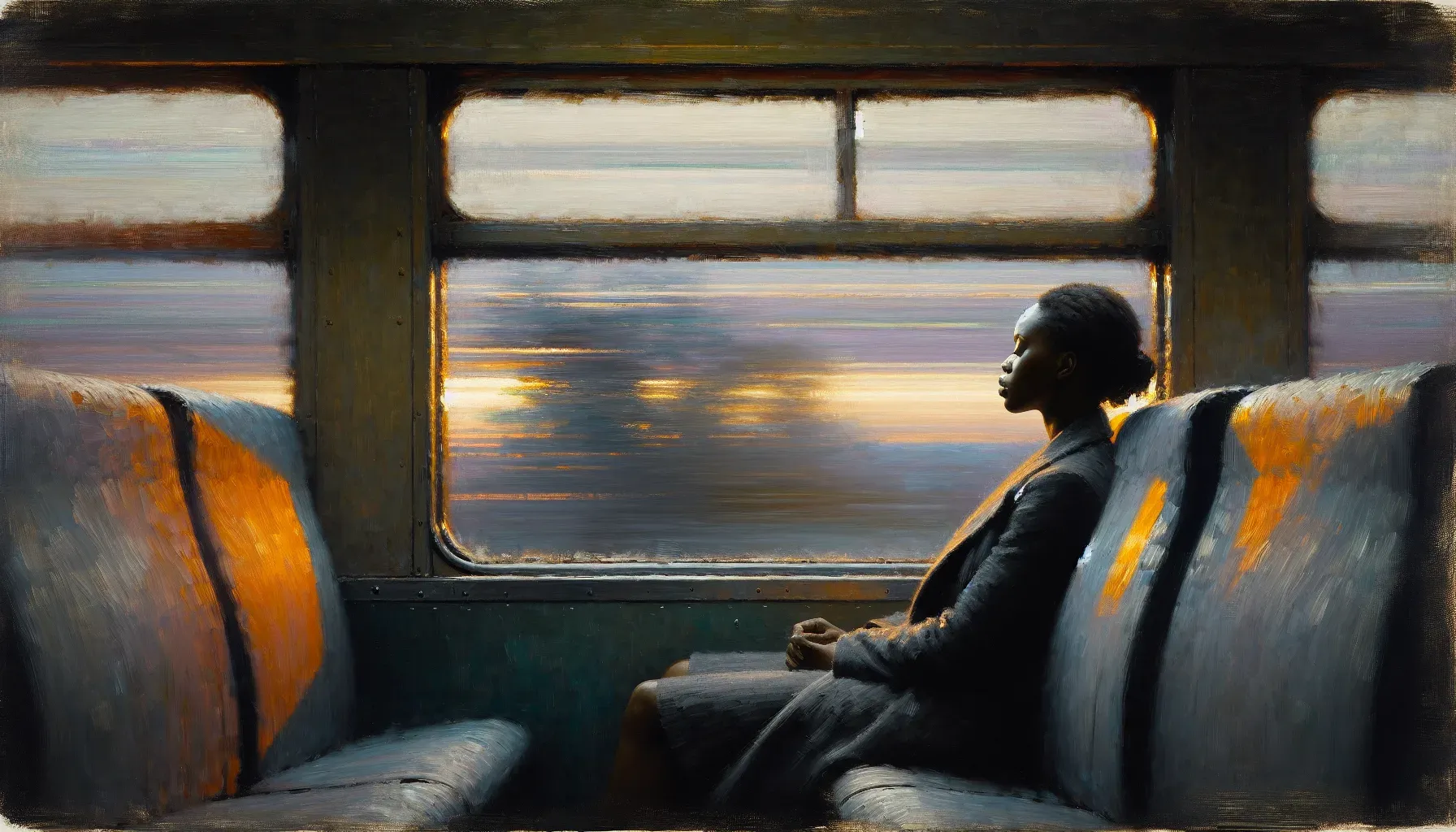
There is a woman who sits near the window on the morning train. She has been there, most likely, on hundreds of mornings before this one. But you have never seen her face, only the top of her head as you scroll past the part of the world where she exists. This is not cruelty. It is something quieter and, in some ways, more troubling. It is the ordinary erosion of the self's capacity to witness.
We do not often think of attention as a moral category. We think of it as a cognitive one, a matter of focus and productivity, something to be managed and optimized. But to look at something, to really look, is not a neutral act. It is a form of care. And its opposite, the perpetual scanning, the restless consuming of surfaces, is not merely distraction. It is a kind of ethical failure we have yet to fully name.
Weil's Radical Gift
Simone Weil, the French philosopher and mystic who died young and wrote with a ferocity that still burns, believed that attention was the rarest and purest form of generosity. She wrote that the capacity to give one's attention to a suffering person is very rare and very difficult. It is nearly a miracle. For Weil, attention was not passive receptivity but an active, disciplined emptying of oneself so that the other could be seen as they actually are, not as we need them to be, not as a reflection of our own concerns.
This is a demanding vision. It asks us to set aside the self's constant editorial instincts, the impulse to categorize, to judge, to move on. It asks us to stay. And staying, in the age of the infinite scroll, has become genuinely countercultural.
The Economy of Gaze
We live inside systems designed, with considerable sophistication, to prevent us from staying anywhere for long. The attention economy is not a metaphor. It is a real market, and our focus is the commodity being traded. Every notification, every autoplay, every algorithmically curated feed is calibrated to ensure that our gaze keeps moving, keeps producing value for systems that profit from our restlessness.
What this produces, over time, is not merely distraction but a kind of perceptual poverty. We become accustomed to grazing, to gathering impressions without dwelling inside them. And a person who only grazes cannot truly witness. They cannot hold another person's reality long enough for that reality to matter. The ethical consequences of this are serious, and we have been slow to reckon with them.
What Careful Looking Requires
To pay genuine attention is to accept a certain vulnerability. When you look carefully at something, it begins to look back. The suffering you slow down to notice becomes harder to dismiss. The complexity you allow yourself to register becomes harder to flatten into a comfortable narrative. Attention creates obligation. This may be precisely why we have become so skilled at avoiding it.
There is a practice among certain painters of what they call slow looking, spending thirty minutes or an hour with a single work, watching what changes in the painting, and in themselves, as the minutes accumulate. Most visitors to a gallery spend less than thirty seconds in front of any given work. The painting offers everything. The viewer takes almost nothing. This is not a failure of the painting.
The same is true of people. Of places. Of ideas. The texture of the world is astonishing, but texture requires time to feel. A life lived at speed is a life largely spent on the surface of things.
Attention as Self-Formation
What we choose to notice, over the accumulated years of a life, quietly shapes who we become. This is not a new idea, but it is one that tends to disappear beneath the noise of more urgent-seeming concerns. The philosopher Iris Murdoch, who owed much to Weil, argued that the moral life was less about dramatic choices at ethical crossroads and more about the quality of attention we brought to the world each ordinary day. To attend carefully to the particular, to resist the flattening of other lives into abstractions, was for Murdoch the foundation of genuine goodness.
This is both reassuring and demanding. Reassuring, because it means that ethics is not reserved for grand gestures or exceptional circumstances. Demanding, because it means that the small choices, where to rest your eyes, who to actually hear, what to let in, are never truly small.
The Quiet Rebellion
To choose, in a world of manufactured urgency, to sit with one thing long enough to understand it, this is not passivity. It is resistance. It is a quiet insistence that the world is worth more than a glance, that people are worth more than their utility to our narratives, that the depth available in any given moment is something worth reaching for.
The woman by the window on the morning train has a whole life arranged behind her face. So does everyone. The question that attention asks us, every day, in every ordinary moment, is whether we are willing to act as though that matters.