
The Forgetting Curve: What Memory Chooses to Lose and What That Says About Who We Are
Forgetting is not failure. It may be the quiet architecture of everything we become.

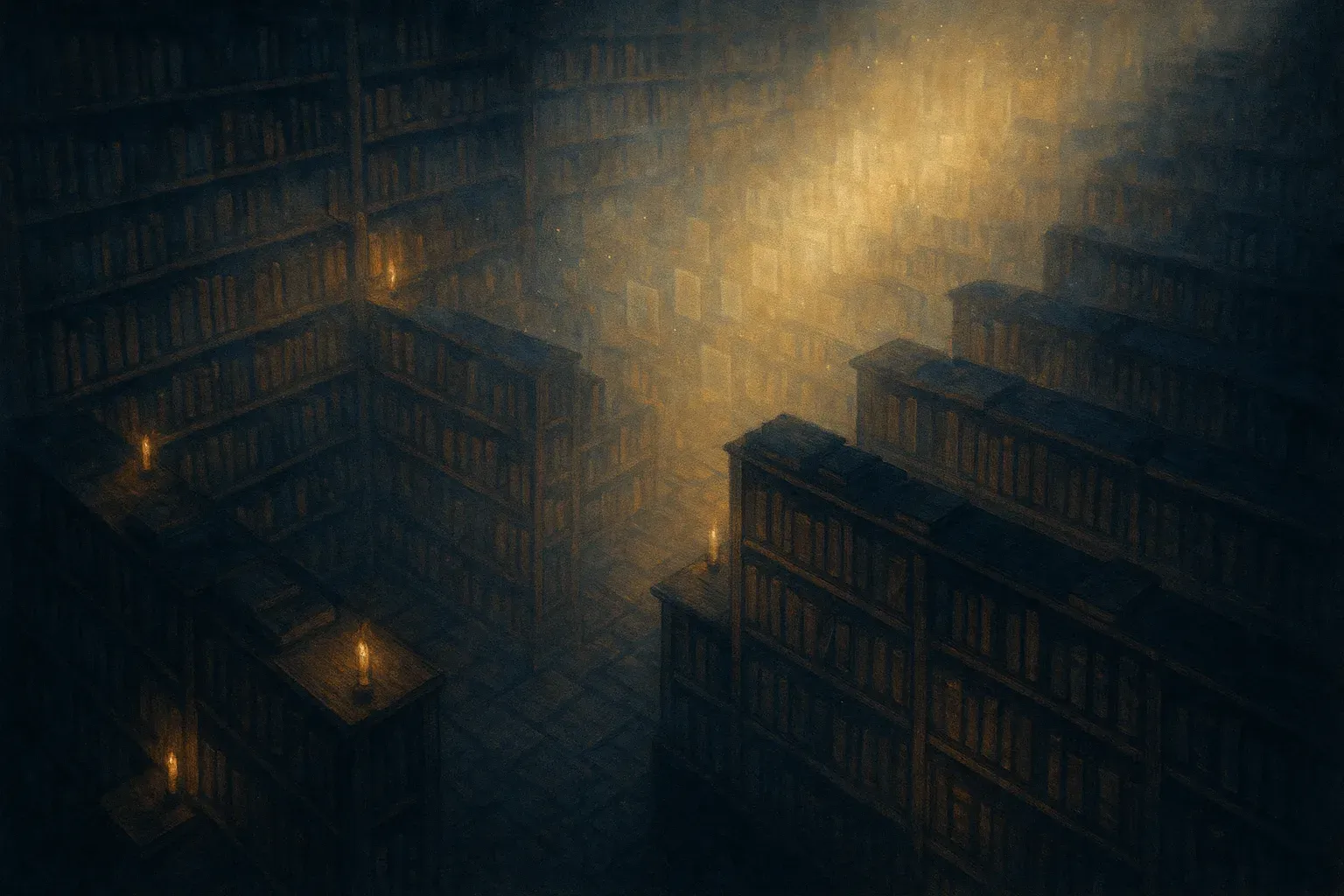
The Library That Burns Selectively
There is a metaphor that has followed memory studies since the nineteenth century, when the German psychologist Hermann Ebbinghaus first mapped the rate at which the mind sheds information. He called it the forgetting curve, a steep slope of loss that drops sharply in the first hours after learning, then levels into a long, slow decline. The image it conjures is of a library quietly catching fire, volumes dissolving into ash before anyone notices they are gone. We tend to grieve this. We speak of memory lapses as failures of self, as though the mind has misplaced something precious and irretrievable.
But what if the fire is not an accident? What if the library has always had a curator, one who works at night, making choices we do not consciously authorize, keeping certain texts and feeding others to the flame with purpose and precision?
What Remains Is Not Neutral
Memory is not a recording device. Every neuroscientist working in the field today will tell you as much, and yet the folk understanding of memory still leans heavily on the idea of storage and retrieval, as though the brain were a hard drive waiting to be read. The reality is far stranger and more interesting. Every time we remember something, we reconstruct it. We pull fragments from different regions of the brain, stitch them together in real time, and then store the stitched version again. Which means that every act of remembering is also, in some small way, an act of revision.
The things we return to most often are not the most accurate memories. They are the most rehearsed ones. And the things we forget entirely are not always the least significant. Sometimes the most charged experiences are precisely the ones the mind refuses to hold in any stable form, fragmenting them, distorting them, or sealing them away in states that feel less like forgetting and more like distance.
What remains in memory, then, is not a neutral archive. It is a curated portrait, shaped by repetition, emotion, narrative need, and the quiet machinery of survival.
The Self as Edited Story
There is a philosophical tradition, running from Locke through Hume and forward into contemporary thinkers like Derek Parfit, that ties personal identity directly to the continuity of memory. The argument, in its simplest form, is that you are who you are because you remember being that person. The thread of recollection stitches the self into coherence across time.
But this tradition tends to focus on what is remembered. Less attention is paid to what is forgotten, and what that forgetting does to the shape of a life.
Consider the person who cannot forget. Clinical hyperthymesia, the condition of near-total autobiographical recall, is frequently described by those who live with it not as a gift but as a burden. The past does not recede. Every slight, every embarrassment, every grief sits as close as this morning. Without forgetting, the self cannot revise. It cannot move. It is pinned to every version of itself it has ever been, simultaneously.
Forgetting, it turns out, is not the enemy of selfhood. It may be one of its primary conditions.
The Mercy and the Meaning
There is something worth sitting with in the idea that we are, at least partly, defined by our absences. The conversations we no longer remember having shaped us anyway. The books that left no quotable lines still altered something in how we see. The losses we have metabolized into normalcy, the griefs that stopped feeling like grief and started feeling like weather, all of these are active in us even as their specific contours fade.
Paul Ricoeur, the French philosopher, wrote about what he called narrative identity, the idea that the self is not a fixed thing but a story we tell and retell. Forgetting, in this light, is not subtraction. It is editing. The self is less a complete manuscript and more a draft that keeps being revised toward something more livable, more coherent, more capable of continuing.
This is not to romanticize forgetting indiscriminately. Trauma that goes unprocessed does not simply fade. It compresses and distorts, surfacing in forms the conscious mind struggles to recognize. The forgetting that heals is different from the forgetting that conceals, and knowing the difference requires a kind of honest attention that is never easy.
A Portrait Shaped by Absence
What we remember tells a story about who we were. What we forget tells a quieter story about who we needed to become. The mind, left to its own slow work, seems to know something about economy, about which textures of experience need to be carried forward and which can be released without the self dissolving.
Perhaps the question worth asking is not only what do you remember, but what have you been allowed to let go. What has the curator decided you no longer need to carry? And in that release, what shape has the self been freed to take?
We are not simply the sum of our stored experiences. We are also the sum of our graceful losses, the things that passed through us and left not absence, but space.